
Every buyer of a fully automatic block machine starts with the same question: how many blocks per hour? The number that decides whether a plant earns money is different — how many hours of the shift the line actually runs. Output is cycle time multiplied by uptime, and uptime is decided by how well the press, the mixer, the pallet flow and the curing area work as one system. That system, not the press alone, is what a buyer is really paying for in a fully automatic block machine.
This article looks at continuous production through the QTJ4-18, the four-block hydraulic concrete block making machine we build for plants that want automatic operation without the footprint and capital of a large-scale line. It covers the working cycle, published specifications, how each configuration changes output, where production quietly leaks away, and what to send us so your quotation matches your block mix.
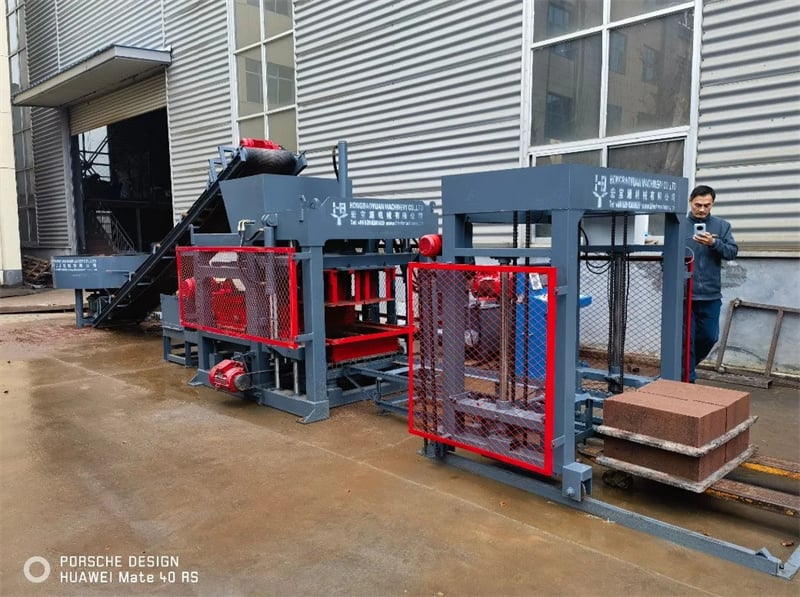
A complete QTJ4-18 line: host machine, hydraulic station, pan mixer, belt conveyor, control cabinet and automatic stacker.
What Continuous Production Means on a Four-Block Machine
The QTJ4-18 is named for its mould: four standard 400 × 200 × 200 mm hollow blocks per cycle. That mould size is the honest starting point for any capacity discussion, because a block making machine that forms four large blocks per stroke and one that forms twenty-six pavers per stroke cannot be compared on paper, and judging either from a single headline number is how buyers end up with the wrong machine.
Continuous production is what happens when nothing in the cycle waits for a person. The material distributor travels over the mould, discharges concrete under sensor and hydraulic control, returns, and the ram compacts the mix by vibration and pressure. The green block leaves the mould on its pallet, the pallet is pushed onto the output conveyor, the stacker lifts it into the curing stack, and an empty pallet takes its place. On a well-set line that sequence repeats at a fixed interval for as long as the mixer keeps supplying concrete.
That is the practical difference between an automatic brick making machine and a manual one. On a manual press, every step is a decision, and hundreds of small decisions become hundreds of small delays over a shift — delays that cluster in the last two hours, when the crew is tired and the pallets are running short.
QTJ4-18 Specifications at a Glance
The published specification for this fully automatic block machine is deliberately conservative: a compact hydraulic press rather than a large hydraulic platform, which usually means a faster route to first production and a lower foundation cost.
|
Item |
Published specification |
|
Model |
QTJ4-18 hydraulic automatic block making machine |
|
Forming method |
Hydraulic press plus vibration |
|
Forming cycle |
Approximately 18 seconds |
|
Hydraulic pressure |
15–22 MPa |
|
Vibration frequency |
4,500 r/min |
|
Pallet size |
880 × 550 × 20 mm |
|
Motor power |
22.5 kW |
|
Overall size |
3,680 × 1,900 × 2,400 mm |
|
Total weight |
Approximately 4,200 kg |
|
Power supply |
220 V / 380 V / 440 V, 50 Hz or 60 Hz on request |
Two details on this automatic brick making machine matter more than the headline numbers. Four cadmium-coated guide columns keep the mould and ram aligned after years of cycling; misalignment is the quiet cause of stepped blocks and cracked moulds. And the distributor uses sensors with hydraulic proportional drive to swing and discharge under forced centrifugal action, so the mould fills evenly instead of relying on gravity and operator timing.
Capacity in Real Terms
Reference output published for this block making machine, based on an eight-hour shift:
|
Block size (mm) |
Pieces per mould |
Reference pieces per 8 h |
|
400 × 200 × 200 |
4 |
7,680 |
|
400 × 150 × 200 |
5 |
9,600 |
|
400 × 100 × 200 |
7 |
13,440 |
|
240 × 115 × 52 (paver) |
26 |
49,920 |
Read those as reference figures, not promises. They assume a clean cycle, a mixer that keeps up, enough pallets and a crew that does not stop the line for small adjustments. The three variables that move the real number are shift efficiency, mix design and curing capacity, which is why we quote capacity for the QTJ4-18 against your mould rather than publishing one headline figure for the smallest block in the range.
Three Ways to Configure This Block Making Machine
The host machine is only part of the investment, and any concrete block making machine is only as continuous as its weakest station.
1. Compact line with a pan mixer. QTJ4-18, control cabinet, hydraulic station, 6 m belt conveyor, JQ500 pan mixer and automatic stacker. One mixer feeds one press, and the stacker replaces the two or three people who would otherwise lift pallets by hand. The shortest path to automatic production and the usual choice for a first line running a single product.
2. Batching line for a larger factory. The same host machine with a PLD800 or PLD1200 batching machine and a JS500 or JDC350 mixer. Batching by weight instead of by loader bucket is the largest quality improvement most plants can make, because cement content stops depending on how full the bucket happens to be.
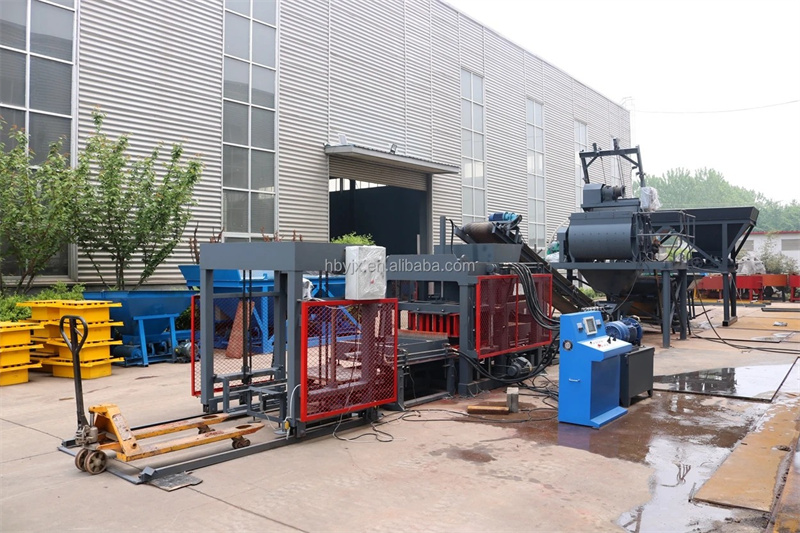
Weighed batching above the press: a steady supply is what keeps the cycle continuous.
3. Colour paver line. Adding a colour feeding system turns the same block making machine into a paver producer. If surface-coloured products are part of the plan, order the colour system with the machine — both the space above the mould and the control sequence need to accommodate it. Whichever configuration you choose, price the whole line: a fully automatic block machine quoted without its mixer, stacker and pallets is a different purchase from one quoted as a working line.
The Five Stations That Decide Uptime
A concrete block making machine only holds its rhythm when five stations are matched to each other.
Batching and mixing. The mixer sets the ceiling. If a batch arrives slower than the press consumes it, the operator shortens cycles to catch up, and short cycles produce under-compacted blocks.
Forming. Hydraulic pressure combined with vibration gives the block enough green strength to leave the mould and be stacked at once. This is where the QTJ4-18 earns its place in a small plant: blocks survive handling without a rest period on the machine, which is what allows an automatic brick making machine to stack directly from the press.
Pallet transfer. Pallets are the circulating bloodstream of any automatic brick making machine. Too few and the stacker waits; bent or caked pallets make block height vary by millimetres, which shows up later as uneven courses on site.
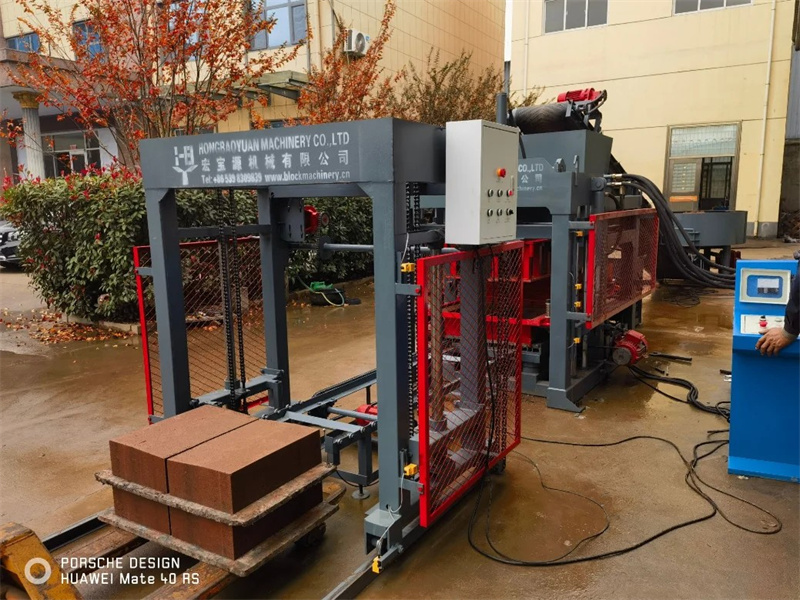
Stacker in action. Fresh blocks go straight to the curing stack while empty pallets return to the press.
Stacking. An automatic stacker collects and stacks finished blocks and returns clean pallets. Beyond the labour saving, it removes the most common cause of damaged green blocks: manual handling in the first minutes after demoulding.
Curing. Curing capacity, not the speed of a fully automatic block machine, limits daily sales. Blocks cannot ship before they reach strength, so a plant forming 7,680 blocks per shift needs stack space for 7,680 blocks plus its curing days. Plan that space before you compare machines.
Where a Concrete Block Making Machine Loses Output
Most lost production on an automatic brick making machine is not a breakdown. It is a drift nobody records: the concrete block making machine keeps cycling all shift, yet the count at the gate falls short of the plan.
Sand moisture. Wet and dry sand need different water. Without a check at the start of each shift, the operator adjusts by eye and the cycle becomes inconsistent.
Aggregate grading. Single-size aggregate packs poorly, forcing longer vibration and accelerating mould wear.
Cycle creep. Two extra seconds per cycle at an 18-second rhythm costs more than ten percent of a shift, and rarely announces itself.
Mould care. A mould cleaned and checked weekly lasts far longer than one cleaned when a block sticks.
Deferred maintenance. Hydraulic oil, filters, limit switches and guide lubrication are cheap; the downtime they prevent is not.
One page per shift — cycle time, batches mixed, pallets stacked, stops and reasons — tells you more about your plant than any brochure, shows whether the block making machine is running to its cycle or being nursed through the shift, and gives a supplier what is needed to diagnose a fault remotely instead of guessing.
One Automatic Brick Making Machine, Four Products
Changing the mould changes the product, which is why one block making machine can serve four markets. Hollow blocks for walls, solid blocks for load-bearing work, interlocking pavers for yards and colour pavers for municipal landscaping all run on the same QTJ4-18 with different moulds and mix designs. The sensible approach for a new plant is to name the three products that will generate most of the first year's revenue and order moulds for those, rather than for everything on the price list.
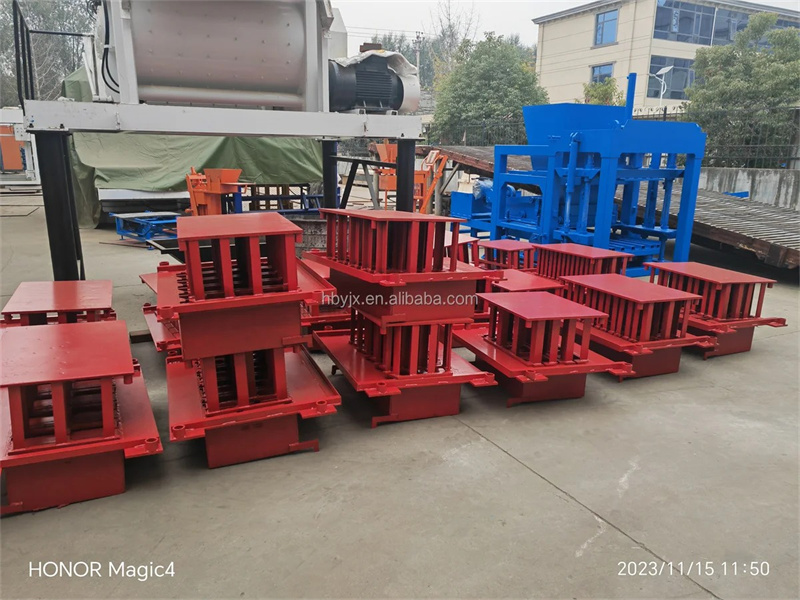
Interchangeable moulds. Changeover time, not machine speed, decides how many products a small plant can sell.
Two changeover rules are worth writing down. Record the height setting for every mould so that changing back is a setting rather than an experiment, and keep one spare wear part per mould — a small cost against a week of waiting for a shipment.
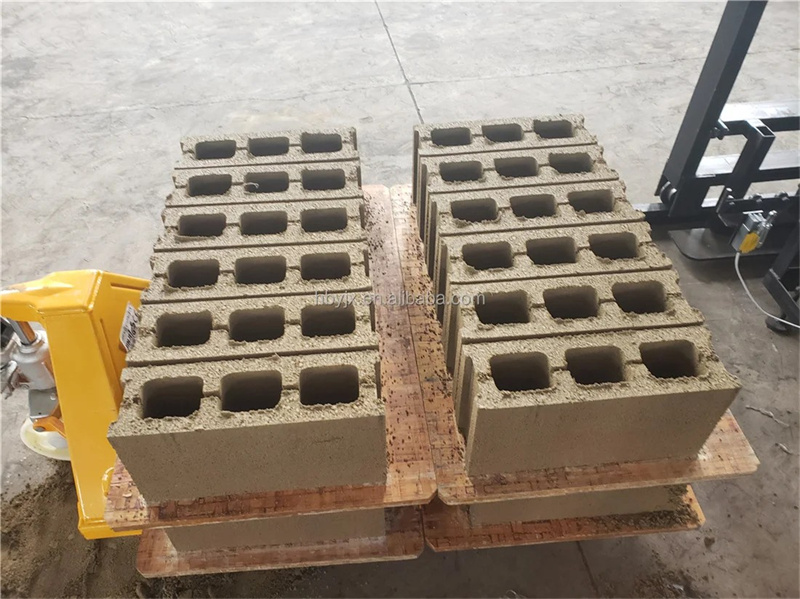
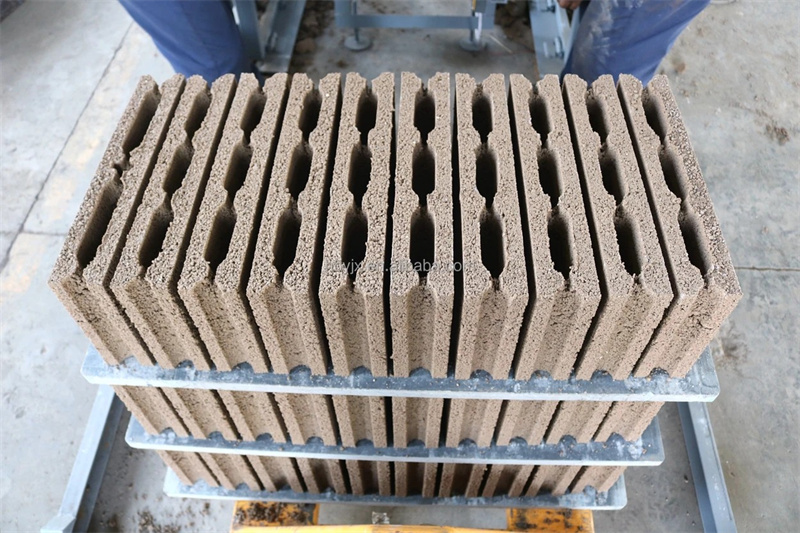
Output from a four-block mould: sharp edges and consistent dimensions come from correct vibration and pressure, not from a longer cycle.
The same press with a paver mould. One machine covers hollow blocks, solid blocks and pavers by changing the mould and the mix.
Site Readiness Before the Container Arrives
None of these items ship with the machine, and all of them are checked before a fully automatic block machine is loaded.
|
Item |
What to confirm |
|
Foundation |
Reinforced base to our drawing, level within tolerance, anchors set before pouring. |
|
Power |
22.5 kW for the host machine plus margin for mixer, conveyor and stacker; voltage and phase confirmed on your order. |
|
Pallets |
Enough 880 × 550 × 20 mm pallets to fill the line and the curing stack, plus replacements. |
|
Materials |
Covered sand and aggregate, dry cement store, one shift of buffer stock. |
|
Curing area |
Hard standing sized for daily output multiplied by curing days. |
|
People |
Crew named before arrival, so training happens on your material with your mould. |
What to Verify Before You Pay a Deposit
Quotations for a fully automatic block machine are rarely like for like, so compare contents before totals: which mixer is included, how many pallets, whether the stacker and conveyor are in the price, how many moulds, and what spare parts ship with the unit.
Then ask four questions that separate manufacturers from traders. Who machines the frame and moulds — in house or subcontracted? Will you send a video of this machine running under power before it is packed? What exactly does the warranty cover, and for how long? Who answers when a limit switch fails in month seven? Ask the same four questions of every supplier quoting a concrete block making machine, compare the answers rather than the adjectives, and request the current certificate set rather than trusting a logo on a website. A block making machine that arrives incomplete costs more in delays than the difference in price.
How Hongbaoyuan Supports the Line
Tancheng County Hongbaoyuan Machinery Co., Ltd. builds block machinery in Tancheng County, Linyi, Shandong, with cutting, machining and painting handled in house across five production lines. Six R&D engineers configure machines and moulds around a buyer's product sizes, raw materials and output targets, two dedicated inspectors monitor incoming material and production, and every machine is test-run before packing, so the line leaves us as a working automatic brick making machine rather than a crate of parts.
For overseas buyers the service package matters as much as the iron. Training covers installation and operation, engineers can travel for commissioning, and a one-year warranty on core components is published for this model. Because we also supply mixers, pallets and crushers, a line can be sourced from one team that has to make the equipment work together — the exact problem a first-time plant owner is trying to avoid. Our equipment is running with buyers in more than fifty countries, and minimum order quantities stay low enough for first-time importers and dealer trial orders.
Next Step: Size the Machine to Your Numbers
The fastest route to a proposal for a fully automatic block machine is to send five things: the block and paver sizes you intend to sell, the output you need per shift, your raw materials and their source, your available power and floor area, and your target start date. With those we can say honestly whether this block making machine is the right size, quote the moulds you actually need, and send a layout drawing you can hand to your civil contractor.
Send the details through our contact page, email [email protected], or call +86-539-8309839. You can also review the QTJ4-18 product page, the wider block making machine range, and the larger hydraulic models if your volume target outgrows a four-block mould.
Frequently Asked Questions
Is the QTJ4-18 a fully automatic block machine or a semi-automatic one?
It is fully automatic in the sense that forming, pallet transfer and stacking run without an operator triggering each step. Loading raw material and supervising quality still need people. Compare labour per thousand blocks when you compare it with semi-automatic equipment.
How many blocks can it produce in eight hours?
Reference figures for this concrete block making machine are about 7,680 blocks for 400 × 200 × 200 mm hollow blocks, around 13,440 for 400 × 100 × 200 mm, and close to 49,920 for 240 × 115 × 52 mm pavers. Real output depends on cycle time, mixer capacity, pallet count and shift efficiency.
Can it make coloured pavers?
Yes. A colour feeding system is added to the line and a surface mix is applied before the base mix is compacted. Order it with the machine rather than retrofitting later, because space above the mould and the control sequence both need to accommodate it.
What power supply does it need?
The host machine of this concrete block making machine uses a 22.5 kW motor and can be built for 220 V, 380 V or 440 V at 50 Hz or 60 Hz. Add the mixer, conveyor and stacker when you calculate the site supply.
How long does shipping and installation take?
Lead time depends on the configuration and moulds ordered; transit depends on the destination port. Installation support is provided as remote guidance and training, with engineers able to attend site for commissioning.
Talk to an Engineer, Not a Catalogue
Continuous production is a design decision, not a feature on a specification sheet, and the QTJ4-18 automatic brick making machine is only as good as the line built around it. Tell us what you intend to sell and where, and we will tell you whether this fully automatic block machine fits your target, what the line needs around it, and what to prepare before it ships.
Request a configuration and price for your block mix: Get a free quote · [email protected] · +86-539-8309839
Copyright © Tancheng County Hongbaoyuan Machinery Co., Ltd - Privacy Policy
