
HBY4-10 CLAY BRICK MAKING PRODUCTION LINE AND QT4-18 CONCRETE BLOCK MACHINE TO CONGO
Brick Making Machine Supplier in Congo: HBY4-10 Clay Bricks and QTJ4-18 Concrete Blocks
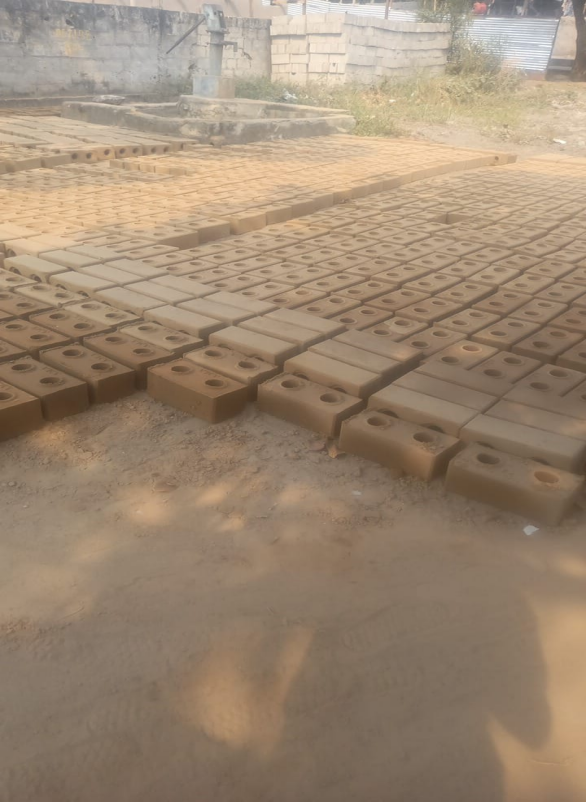
One buyer in Congo has ordered from us repeatedly, taking machines into his own market and shipping several containers a month. His orders combine two product families: HBY4-10 lines for clay and soil interlocking bricks, and QTJ4-18 machines for concrete blocks. That combination is the interesting part of the case.
Quick answer
- A repeat buyer in Congo purchases block and brick machinery from us for resale in his own market.
- Typical shipping: several containers per month.
- Machines ordered across the relationship include the HBY4-10 interlocking brick line and the QTJ4-18 concrete block machine.
- Two product families, because a clay brick production line and a concrete block machine serve different buyers in the same market.
- A repeat order tests molds, spare parts, and build consistency far more than it tests price.
The relationship
| Item | Detail |
|---|---|
| Buyer | A distributor in Congo, reselling into the local market |
| Order pattern | Repeat orders, several containers per month |
| Machines | HBY4-10 interlocking brick line; QTJ4-18 concrete block machine |
| Shipping | Consolidated containers, export packed |
Why one buyer wants two product families
Clay and soil interlocking bricks and concrete blocks are not competitors in most African markets. They are sold to different customers for different parts of a building.
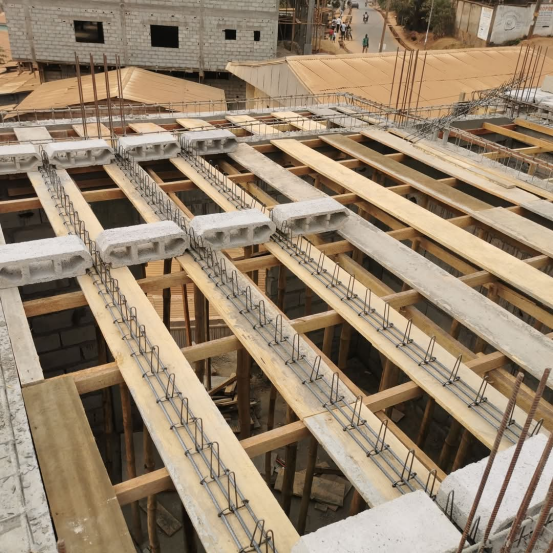
An interlocking soil brick is made close to where it is used, with a small cement addition, and it is bought by people building houses and boundary walls who are price-sensitive and can accept a hand-laid finish. A concrete hollow block is a higher-specification product: dimensional accuracy, compressive class, and a surface that takes plaster and paint predictably. It is bought by contractors working to a drawing.
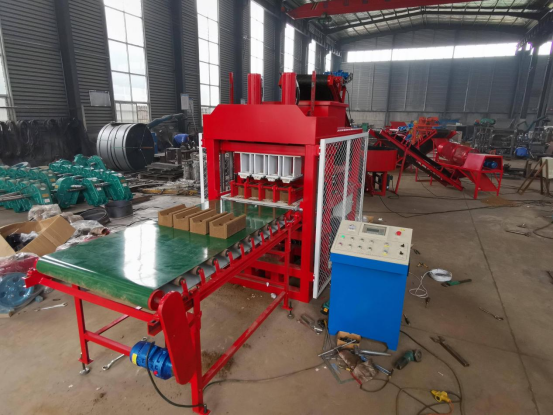
A distributor who carries only one of the two turns away half the inquiries that reach him, which is the practical argument for choosing a brick making machine supplier who covers both. A distributor who carries both can quote the whole job, and that is the logic behind this buyer's order mix. It is also why the two lines do not compete for the same floor space or the same crew: the HBY4-10 clay brick production line runs on soil, crusher, and screen, and the QTJ4-18 concrete block machine runs on cement, aggregate, and pallets.
What a repeat order actually tests
A first order tests a quotation. A repeat order tests everything else, and buyers who resell have a harder standard than buyers who produce, because every fault they accept lands on their own customer.
Build consistency. Machine number four has to be the same machine as machine number one. When a distributor's customers compare notes, any drift in frame, guard, or control layout is visible.
Mold compatibility. A distributor accumulates molds. New machines have to accept the molds already in circulation, or every additional machine resets the buyer's tooling investment.
Spare parts. Resellers carry stock, and stock that cannot be replenished stops being a business. A block machine supplier who can ship the same wearing part two years later is worth more than one who quotes lower today.
Documentation. Operators change. A machine delivered with a clear manual, a parts list, and a wiring diagram keeps running after the original operator leaves, which matters more to a reseller than to an owner-operator.
Container discipline. Several containers a month only works if each one is packed to spec. Nude packing for full containers and iron-box export packing for LCL are both standard here, and the difference between a well-blocked container and a rushed one is discovered at destination.
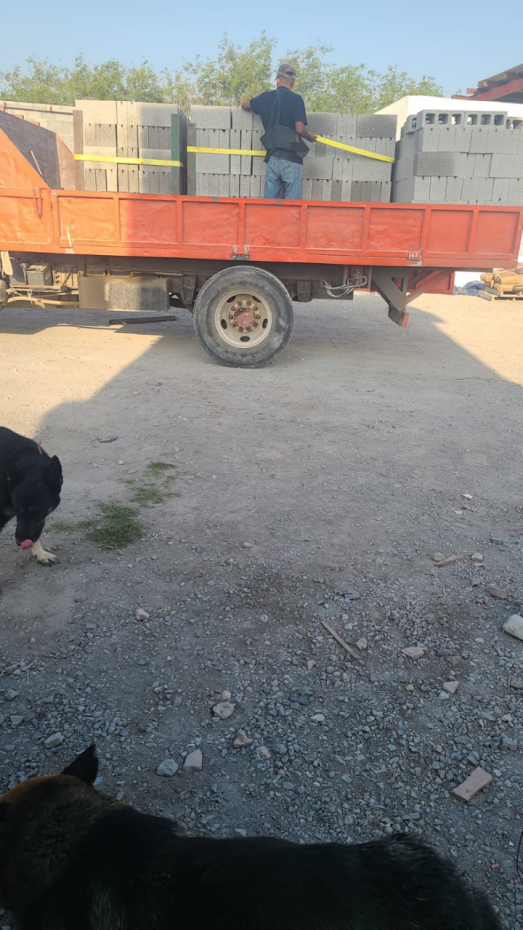
Two lines, two different operating disciplines
Worth separating, because a buyer running both will otherwise apply one habit to both machines.
On the HBY4-10 side, the variables are soil and moisture. Four bricks per cycle at a 7–10 second cycle, 25–32 MPa, PLC with a touch screen, one operator. The plant lives or dies on the crusher, the screen, and the mixer doing their jobs before the press ever cycles, and on curing being allowed to take its time.
On the QTJ4-18 side, the variables are mix design and pallet logistics. An 18-second forming cycle, 15–22 MPa, 880 × 550 × 20 mm pallets, 22.5 kW. Output is a function of pallet count and curing capacity as much as of cycle time, and a plant that runs out of pallets produces nothing regardless of how well the machine performs.
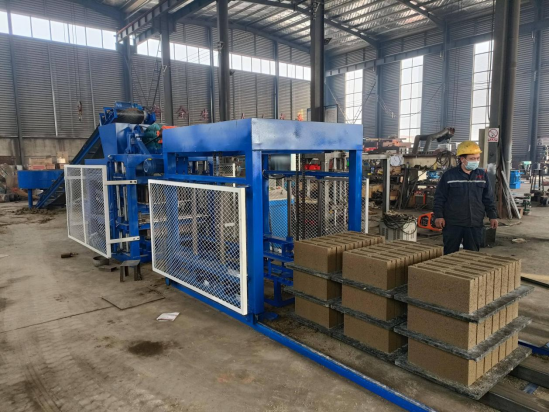
The HBY5-10 interlocking earth block line is the other soil-brick option we build for this market. A reseller who understands that difference can advise his own customers. One who does not sells machines and inherits the service calls.
What this pattern suggests for other buyers
- If you are building a distribution business rather than a single plant, order across product families and keep molds and wearing parts common between machines.
- Agree a spare-parts list at every order, not only the first one.
- Ask for manuals and parts lists in the format your customers can use, and in a language they read.
- Consolidate shipments rather than shipping machine by machine; the freight saving per unit is the margin a distributor lives on.
- Have the supplier's engineer available for first commissioning at your customer's site, at least for the first installation of each model.
FAQ
Can different machine models be shipped in one container?
Yes. Consolidated shipments are normal for buyers ordering across model families, and packing is specified per unit: iron-box export packing for LCL and nude packing for full containers, with blocking to suit the mix in the box.
Do the machines share molds?
No. The HBY4-10 takes interlocking soil brick molds and the QTJ4-18 takes concrete block, paver, and curb molds on 880 × 550 × 20 mm pallets. They are separate tooling families, and both should be ordered with their own spare molds.
How long is delivery for a repeat order?
Delivery is within 15 days after deposit for standard models. Repeat orders with unchanged specifications are the fastest case, because molds and packing are already defined.
Is training available for a distributor's customers?
Yes. Installation and operation training are part of after-sales support, and engineers are available to service machinery overseas.
Planning a mixed order?
If you distribute or operate more than one machine type, send us the model mix you intend to carry, your target monthly volume, and the container configuration you prefer. We will propose a consolidated loading plan, the molds and spare parts that should travel with each machine, and the documentation set for your customers. Sample testing is available before you commit, and you can visit the factory or arrange a video walkthrough of machines under assembly. Hongbaoyuan has built block and brick machinery for over 5 years and supplies more than 17 countries, with ISO 9001:2008 certification and BV inspection available. Email [email protected] or call +86-539-8309839.