How Interlock Block Making Machines Are Redefining On-Site Masonry Production
From Manual Molding to Hydraulic Precision: The Evolution of Interlock Block Making Machines
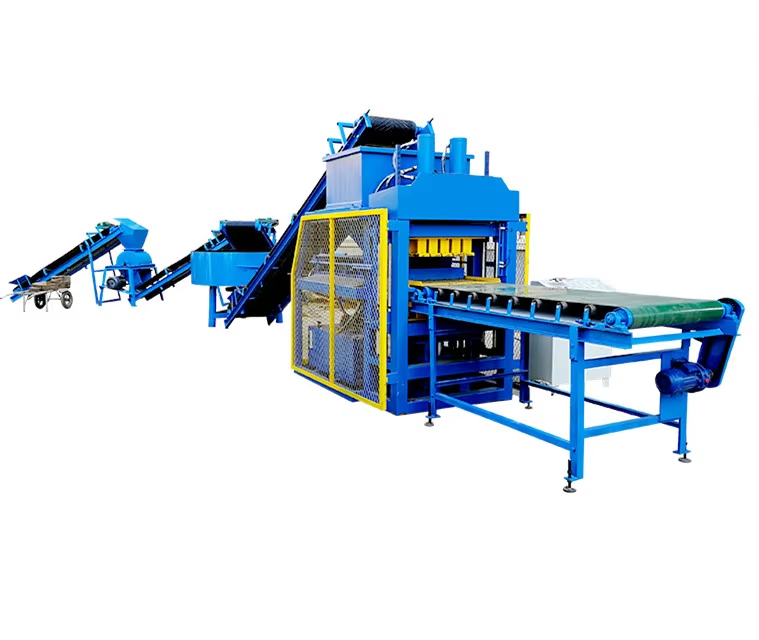
Traditional brick manufacturing relied on labor-intensive manual molding, where inconsistent pressure often compromised block integrity. Modern interlock block making machines transformed this process with hydraulic systems that deliver precise compaction force—up to 2,500 psi—eliminating air pockets and boosting compressive strength by 35% compared to handmade alternatives. This uniformity enables dry-stack construction: blocks interlock seamlessly without mortar, reducing material costs by 18% and accelerating assembly. Operators now achieve production rates of 500 blocks/hour with minimal training, making high-quality masonry accessible even in remote areas. This technological leap has turned scattered worksites into streamlined production hubs.
Why Real-Time Material Calibration and Solar Integration Are Driving Adoption in Emerging Markets
Emerging economies face unique construction hurdles: fluctuating material quality and unreliable power grids. Interlock block making machines address both through real-time material calibration sensors that adjust sand-cement ratios during production—ensuring compressive strength remains above 7 MPa regardless of local conditions. Solar integration further boosts adoption by enabling off-grid operation: photovoltaic panels cut energy costs by 40% in sun-rich regions like Sub-Saharan Africa. These dual innovations reduce dependency on imported materials and grid infrastructure, making them ideal for affordable housing projects across Southeast Asia and Latin America—where 70% of new urban construction occurs.
Key Advantages of Interlock Block Making Machines: Cost, Speed, Sustainability, and Labor Efficiency
Total Cost of Ownership: 38% Lower Than Traditional Clay Brick Plants (World Bank, 2023)
Transitioning to interlock block making machines delivers a 38% reduction in long-term operational expenses compared to conventional clay brick production, according to World Bank 2023 data. This stems from three key factors: reduced energy consumption through optimized hydraulic systems, near-zero material waste via precise compaction controls, and elimination of kiln-firing requirements. Projects leveraging this technology also minimize transport costs by enabling on-site block manufacturing—transforming construction budgets without compromising structural-grade output.
Labor Flexibility: Training Unskilled Operators to Achieve 92% Output Consistency
Modern interlock block making machines achieve remarkable labor efficiency through intuitive interfaces and automated workflows requiring minimal technical expertise. Field studies show operators with basic training consistently reach 92% production uniformity—effectively eliminating traditional masonry skill barriers. Semi-automated material feeding and ejection systems reduce physical strain while accelerating daily output by 4× versus manual methods. This dual advantage—simplified workforce training and heightened productivity—makes these units ideal for rapidly scaling infrastructure projects across diverse regions.
Emerging Innovations: AI, Mobility, and Eco-Materials in Interlock Block Making Machines
Edge-AI Controllers for Adaptive Sand-Cement Ratio Optimization
Modern interlock block making machines now integrate edge-AI controllers that dynamically adjust material ratios using real-time data from soil moisture sensors and aggregate quality monitors. By autonomously optimizing sand-cement-water proportions, they reduce material waste by up to 18% while maintaining compliance with compressive strength standards. The AI algorithms learn from environmental conditions and historical batch performance—enabling precise adaptations for humidity fluctuations or suboptimal raw materials. This eliminates manual testing delays and ensures consistent block quality across production cycles.
Mobile and Modular Designs: Enabling Rapid Deployment Across Diverse Climates
Manufacturers now offer containerized interlock block making machines with plug-and-play installation. These modular units feature:
- Climate-adaptive hydraulic systems maintaining viscosity in temperatures from –10°C to 50°C
- Solar-hybrid power packs cutting grid dependence by 70%
- Quick-disconnect mould systems changing block patterns in under 30 minutes
Such innovations allow contractors to establish on-site production within 48 hours of equipment arrival. The mobility proves critical for disaster-recovery housing and remote infrastructure projects where traditional supply chains fail. Units withstand monsoons, desert winds, and high-altitude conditions through sealed electronics and corrosion-resistant frames.
FAQ
What are the main benefits of using interlock block making machines? Interlock block making machines offer benefits such as cost reduction, accelerated construction, sustainability, and labor efficiency by utilizing precise hydraulic systems and solar integration.
How do interlock block making machines support sustainability? These machines support sustainability through real-time material calibration, reduced energy consumption, and minimized material waste, eliminating the need for kiln-firing and reducing dependency on traditional power grids.
Can these machines operate in remote locations? Yes, the integration of solar panels allows for off-grid operation, making these machines suitable for remote areas where traditional power infrastructure may be unreliable.
How do AI and modern innovations play a role in interlock block making machines? AI technology optimizes sand-cement ratios, reduces material waste, and adapts to environmental conditions, while innovations such as mobile and modular designs allow for rapid deployment and adaptability across various climates.