
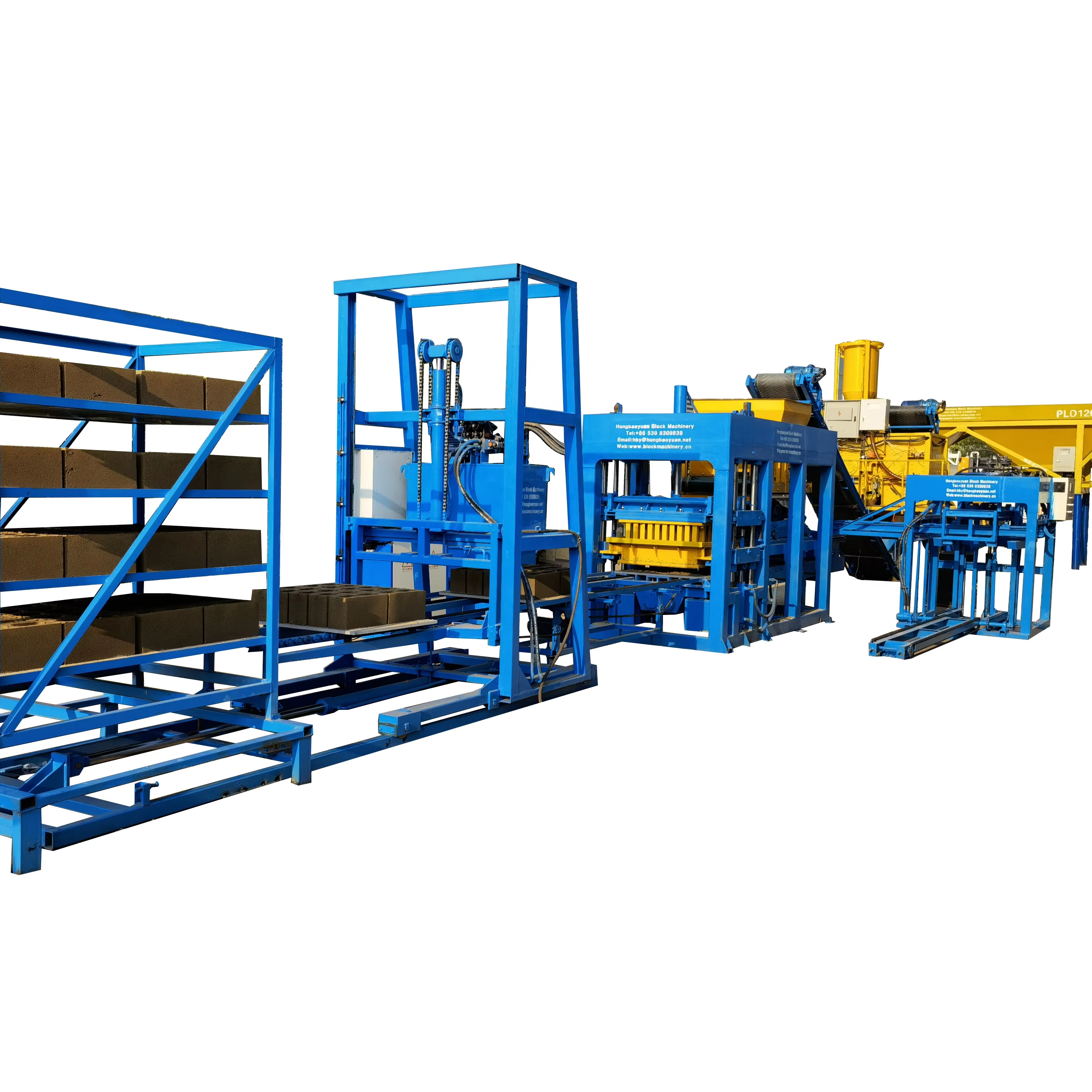
Superior Block Quality and Structural Consistency at Scale
When it comes to making concrete blocks, hydraulic pressure makes all the difference in achieving that rock solid quality we need. The process basically squishes the cement mixture together with tremendous force, which gets rid of those pesky air bubbles and creates blocks that have the same density from corner to corner. Blocks produced this way typically hit compression strengths well over 25 MPa, sometimes even higher. What's really impressive is how consistently accurate the dimensions stay across whole batches. This matters a lot when building big structures such as bridges or skyscrapers because if just one block doesn't meet standards, it could spell trouble for the whole project's stability and safety down the line.
How hydraulic pressure ensures uniform density, compressive strength (¥25 MPa), and dimensional accuracy across batches
- Density Control: Hydraulic systems apply uniform pressure exceeding 150 tons, compacting raw materials into homogeneous blocks without voids
- Strength Guarantee: Controlled compression achieves minimum 25 MPa ratings—meeting international building codes for load-bearing structures
- Dimensional Precision: Automated molds and pressure calibration maintain tolerances under ±1.5 mm, enabling seamless masonry work
Real-world quality control: ±3% strength variance in 500,000-unit production runs for infrastructure projects
In a recent highway development requiring 500,000 blocks, hydraulic cement block making machines maintained compressive strength variance below ±3% across the full run—validated by third-party testing. This performance surpasses traditional methods' typical ±8–10% fluctuation and reduces construction delays by eliminating batch rejections and unnecessary structural reinforcements.
Economic Efficiency: Lowering Total Cost of Ownership with In-House Cement Block Making Machines
Labor, logistics, and markup savings: Automating production vs. outsourcing brick supply
When companies bring in their own hydraulic cement block making equipment, they cut down on several big expense areas all at once. Manual labor costs drop dramatically since automation handles most of the work, typically reducing staff needs somewhere between 60 and 75 percent compared to traditional methods. Plus, making blocks right on site means no long hauls to transport materials, which can save around 40 percent on shipping for bigger projects. And let's not forget about those extra charges from outside suppliers. Most contractors know all too well that third party vendors usually add 15 to 25 percent onto what they actually paid for materials. With in house production, raw materials turn into finished blocks at roughly 18 to 25 cents each instead of the 35 cents plus markups seen with outsourcing. For every million blocks made this way, businesses end up saving tens of thousands of dollars that would otherwise go straight to middlemen.
ROI timeline analysis: Break-even typically achieved within 2–3 years for projects requiring ¥2 million blocks
The capital investment in hydraulic cement block making machines delivers measurable payback within 24–36 months for projects exceeding two million blocks. This accelerated ROI stems from cumulative savings across three dimensions:
- Labor: $140k–$220k annual reduction through automated compaction and curing
- Logistics: $85k–$120k saved per 500k blocks in transport costs
-
Material waste: 8–12% less cement consumption through precise volumetric batching
For reference, a $740k investment achieves breakeven at 1.8 million blocks—with subsequent production yielding 35–50% cost advantages over outsourced supply chains. ROI timelines shorten proportionally with block volume due to fixed-cost amortization.
Scalable Production Capacity to Match Aggressive Construction Schedules
From 1,200 to 12,000 blocks/hour: Modular hydraulic cement block making machine configurations for phased project demands
Hydraulic cement block makers that come in modular designs offer something really special for big construction jobs, since they can produce anywhere between 1,200 and as many as 12,000 blocks every single hour. What makes them so useful is their ability to match what contractors need at different points in a project. Start small with basic setups for the beginning phase, then simply add more automated parts as work ramps up. Take highway construction where someone might need around 3 million blocks total. A machine set to make 2,400 blocks an hour initially can be expanded later to hit 8,000 blocks per hour by attaching extra pressure chambers and upgrading conveyors. This kind of flexibility means no stuck situations with production slowdowns and better money management because nobody has to spend too much upfront on equipment they won't fully use right away. The compression system works so well that block density stays pretty much the same throughout, with only about 1.5% difference even when running fast or slow. Contractors love being able to manufacture blocks exactly when needed right there on site instead of waiting for deliveries. This cuts down on dependency on outside suppliers and keeps those expensive delays away from happening due to missing materials, which matters a lot when building things like sports arenas or factories under strict time limits.
Operational Resilience and Supply Chain Autonomy on Large-Scale Sites
Big construction jobs run into all sorts of problems when their supply chains get messed up. Think about it: material shortages pop up out of nowhere, ships get delayed for weeks, prices swing wildly. All this stuff throws timelines and budgets completely off track. When contractors bring those hydraulic cement block makers right onto the job site, they cut the middlemen out entirely. No more waiting for suppliers to deliver what they promised. The blocks just keep coming no matter what's happening in the wider market. Plus, there's money saved on transportation and fewer emissions since everything gets made where it needs to go. Site managers can watch exactly how many blocks are being produced each day and check the quality themselves. This hands-on approach makes it possible to stick to tight deadlines without cutting corners on safety or letting costs spiral out of control.
FAQs
How does hydraulic pressure ensure uniform quality in concrete blocks?
Hydraulic pressure removes air bubbles and compacts the cement mixture, ensuring uniform density and enhancing compressive strength over 25 MPa.
What are the financial benefits of in-house cement block production?
In-house production significantly reduces labor, logistics, and material costs, leading to substantial savings per project.
How customizable are hydraulic cement block making machines?
These machines offer modular designs, allowing scalable production capacity from 1,200 to 12,000 blocks per hour, tailored to project demands.
What are the advantages of having cement block making machines on-site?
On-site machines offer supply chain autonomy, reducing dependency on external suppliers, and ensuring timely production without delays.
Table of Contents
- Superior Block Quality and Structural Consistency at Scale
- Economic Efficiency: Lowering Total Cost of Ownership with In-House Cement Block Making Machines
- Scalable Production Capacity to Match Aggressive Construction Schedules
- Operational Resilience and Supply Chain Autonomy on Large-Scale Sites
- FAQs