
Balanced Production Capacity for Real-World Project Scales
Matching 3,000–8,000 Blocks/Day Output to Typical Small-to-Mid-Sized Construction Timelines
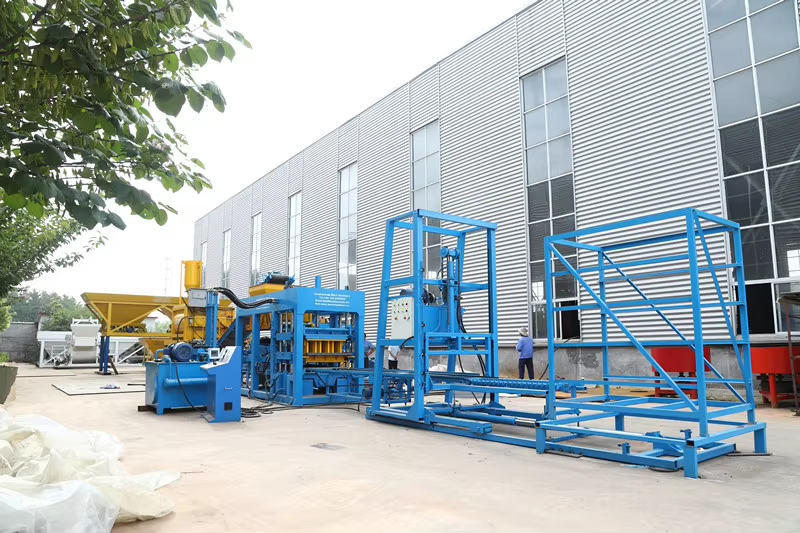
Medium sized cement block makers give builders just the right amount of production for most jobs on site. These machines can crank out anywhere from 3,000 to 8,000 blocks each day, which works great for building regular houses, small shopping centers, or even local roadwork projects. The sweet spot is that they prevent those frustrating delays we get when using old fashioned hand made methods. But unlike giant industrial models, they don't flood the job site with way too many blocks at once. Contractors appreciate how this balanced approach keeps things moving forward smoothly without ending up with mountains of extra bricks taking up space and money that nobody really wants to spend on wasted materials sitting around unused.
Avoiding Costly Underutilization (Large Machines) and Throughput Limits (Manual/Small Units)
When operations don't match up properly, companies end up facing serious money problems. Big industrial machines tend to just gather dust on smaller jobs, eating away at budgets through depreciation and maintenance while producing nothing worthwhile. On the flip side, going too small means relying on manual work or tiny equipment that simply can't keep pace with what's needed each day, leading to project delays and extra hours paid for workers who are already stretched thin. The numbers back this up too business owners are losing around seven hundred forty thousand dollars every year just because their equipment isn't being used effectively according to research from Ponemon Institute last year. That's why many smart operators are turning toward medium sized semi automatic systems these days. These setups strike a better balance, adjusting production levels based on what's actually happening at construction sites rather than guessing wrong either direction.
Superior Economic Efficiency for Growing Businesses
Faster ROI: 12–18-Month Payback vs. 24+ Months for Fully Automatic Cement Block Making Machines
For many contractors, medium sized cement block makers pay off much quicker than their fully automatic counterparts. Most see a return on investment within just 12 to 18 months, while those big high capacity systems take over 24 months to break even. Why? The numbers tell the story pretty clearly. Smaller machines eat up about 32 percent less power and cost far less money upfront. This matters a lot for folks working on home projects or city infrastructure jobs where demand fluctuates. When production matches what's actually needed, there's no wasted money sitting around unused expensive gear gathering dust. A recent industry report from early 2024 shows something interesting too. Contractors who go with appropriately sized equipment end up keeping roughly 21% more cash each year in those crucial first two operating years. Makes sense when looking at the math.
Lower Labor Dependency and Enhanced On-Site Safety with Semi-Automatic Operation
The semi automatic cement block makers really slash the need for workers by about 40% when compared to doing everything by hand, plus they make the job site much safer overall. These machines come packed with safety features such as emergency stop buttons and protective guards on all those moving parts. That helps prevent dangerous situations where workers have to get too close to heavy machinery. According to OSHA data from last year, this actually tackles around 26% of accidents happening during construction work related to handling materials. When the feeding system and block removal process are automated, one person operating these machines can produce over 3,500 blocks each day. The result? Smoother running operations across the board, reduced expenses in production, and employees no longer stuck doing repetitive grunt work. Instead, they can focus their attention on things that matter more, like checking product quality or coordinating activities at different sites, all while maintaining consistent output levels throughout the day.
Consistent, Code-Compliant Block Quality Without Compromise
Precision Batching, Vibration Control, and ASTM C90 Compliance Reduce Waste by Up to 14%
Medium cement block makers keep structures solid thanks to their automated batching systems that get the water to cement ratio just right, cutting down on the ±15% variation we see when people mix things manually. The machines use advanced vibration tech to pack everything together evenly, getting dimensions spot on within ±1mm. That's way better than what most hand methods can achieve at around ±5mm, which really matters when building load bearing walls. These machines also follow ASTM C90 standards pretty closely, so each batch comes out with similar compressive strength. Studies from several manufacturers indicate that sticking to these tight specs cuts material waste somewhere between 10-14%. Precise settings mean fewer bad blocks and less need for fixing mistakes later. What makes it all work is the semi automatic nature of these machines. They maintain good quality without needing someone with years of experience watching over every step, which means smaller construction jobs can still meet building codes without breaking the bank.
Scalable Versatility Across Product Types and Volume Shifts
Quick Mold Changes Enable Diverse Block Sizes, Shapes, and Hollow-Core Configurations
Medium cement block making machines feature modular mold systems that swap configurations in under 30 minutes—dramatically reducing downtime between production runs. This agility enables manufacturers to pivot efficiently between:
- Standard rectangular blocks (4", 6", 8" widths)
- Interlocking pavers and decorative units
- Hollow-core variants with optimized void patterns for thermal and structural performance
The versatility of these machines means one piece of equipment can handle all sorts of changing job requirements. Think about it going from basic foundation work where consistent blocks are needed right through to those fancy architectural details that make buildings stand out. When companies get rid of those time wasting mold changes, their machines actually stay running around 85 percent of the time even when switching between different products. For construction crews, this means fewer expensive delays when plans change halfway through a project. And manufacturers benefit too since they can take on various jobs without having to buy extra machines for every new task that comes along.
FAQ
-
What is the optimal daily output for medium-sized cement block makers?
The optimal daily output ranges from 3,000 to 8,000 blocks, which suits most small-to-mid-sized construction projects. -
How do medium cement block machines impact labor and safety?
They reduce labor dependency by approximately 40% and enhance job site safety due to automation and built-in safety features. -
What is the payback period for medium-sized cement block machines?
The payback period for these machines is generally between 12 to 18 months, which is shorter compared to fully automatic machines. -
How versatile are medium-sized cement block making machines?
These machines can quickly switch molds in under 30 minutes, allowing for a diverse range of block sizes and shapes.