
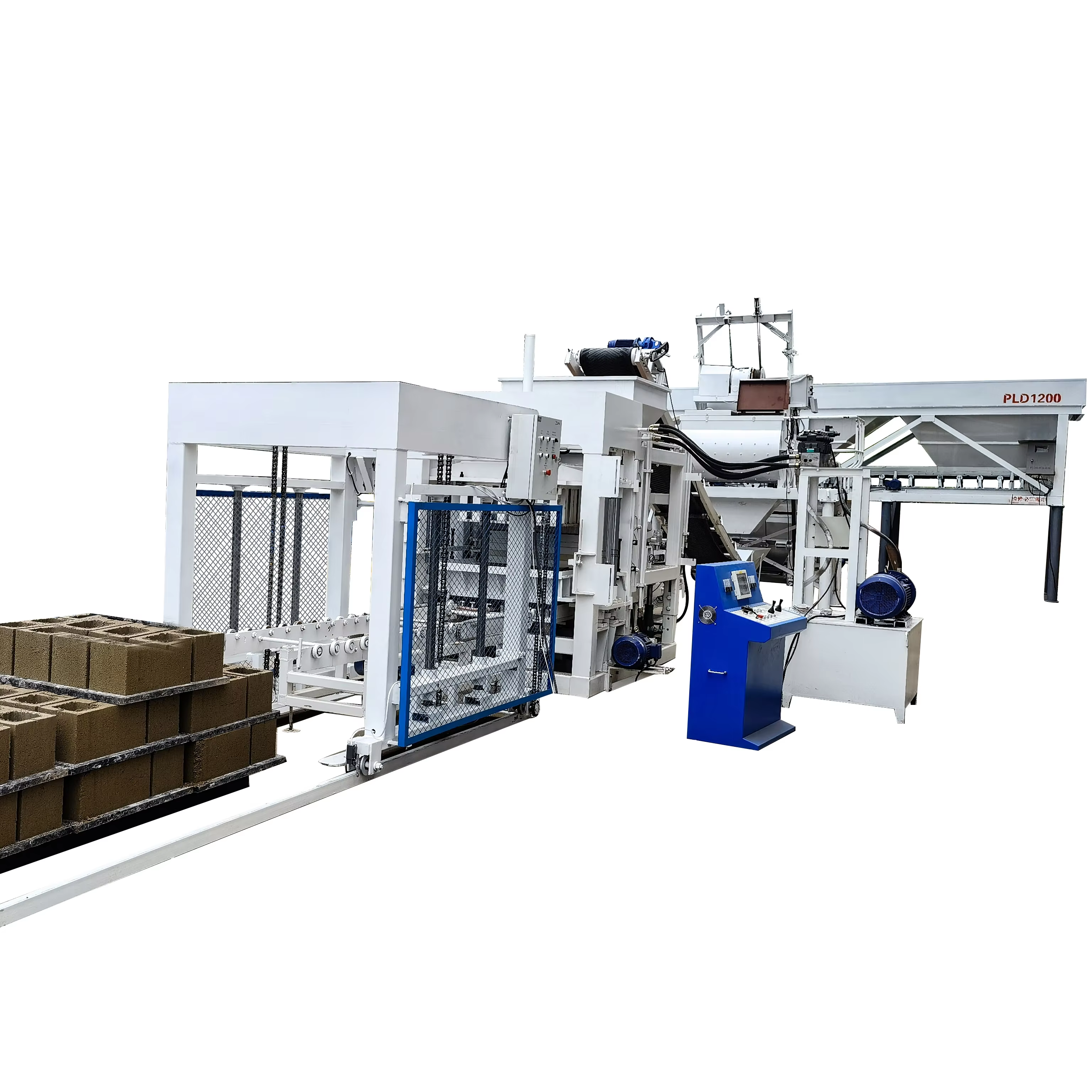
Production Capacity and Output Consistency
Matching Cement Block Making Machine Output to Project Scale and Demand
Getting the right production capacity when choosing equipment helps avoid those expensive bottlenecks or wasted resources sitting around doing nothing. Let's talk about capacities for a moment. The design capacity is basically what the machine can do in perfect conditions, but real world effective capacity tells a different story. Maintenance downtime, operator changes throughout the day, and variations in materials usually bring actual output down somewhere between 15 to 20 percent below those nice round numbers on paper. Big infrastructure jobs that need over 5,000 blocks each day absolutely require those high volume machines running at 300 to 400 cycles per hour. On the flip side, smaller rural projects actually work better with semi automatic models that produce around 800 to 1,200 blocks during an 8 hour workday. Matching output precisely keeps companies from spending too much upfront money while still making sure deliveries happen on time at construction sites.
How Vibration, Pressure, and Compaction Technology Ensure Dimensional Precision and Uniform Strength
Modern compaction systems work against the inherent inconsistencies of cement to ensure uniform shape and solid structure throughout. These machines typically use high frequency vibrations ranging from around 8,000 to 12,000 vibrations per minute which helps get rid of trapped air pockets. After this step comes the actual pressing phase where two hydraulic rams exert between 1,500 and 3,000 pounds per square inch of pressure on the material. This combination usually results in over 95% density, something really important when building structures that need to support weight. Better quality machines now come with adjustable compression settings that change how long pressure is applied based on what sensors detect about moisture levels in real time. The whole two stage process keeps dimensions pretty accurate, staying within plus or minus half a millimeter, and maintains density differences below 2%. Independent tests following ASTM standards show these properly compacted blocks have about 35% greater strength compared to those made without proper compaction techniques.
Core Mechanical Integrity: Build Quality and Critical Components
Hydraulic System Performance and Long-Term Forming Reliability
The hydraulic system in a cement block maker really determines how long it will last and whether the blocks come out consistently good quality. When the pressure stays within that sweet spot of 150 to 300 BAR during operation, each compaction cycle produces blocks with fewer flaws. We're talking about problems like honeycombing inside the blocks or edges that crumble apart, issues that builders throw away because they don't meet standards. According to the Global Building Materials Survey from 2023, these kinds of defects make up around 17% of all rejected construction materials. Modern machines use servo valve tech that keeps pressure stable within plus or minus 2%, even after going through tens of thousands of cycles. Manufacturers also treat their cylinders with heat and coat pistons with phosphate layers to protect against wear from abrasive cement dust. This simple upgrade can stretch maintenance schedules by almost half compared to regular parts. For anyone serious about quality control, looking for ISO 10100 certification becomes important, particularly if working with materials that have inconsistent moisture levels throughout production runs.
Mold Material Selection—Steel Grade, Surface Hardness, and Wear Resistance
The quality of molds directly affects how consistently products are made and what the total costs will be over time. High quality tool steels like DIN 1.2344 contain special chromium molybdenum vanadium alloys that help maintain accurate shapes even after forming thousands of blocks. When these steels undergo nitriding treatment, they reach surface hardness levels between 60 and 64 HRC. This makes them three times more resistant to wear than regular molds. The treatment also helps fight against damage from silica particles, which can cause wear rates of around 0.3 mm per month in lower quality molds. Manufacturers need to look at several important factors when assessing mold performance.
| Property | Minimum Threshold | Performance Impact |
|---|---|---|
| Surface Hardness | 58 HRC | Resists abrasion from aggregate particles |
| Core Toughness | 38 HRC | Prevents crack propagation under vibration |
| Surface Roughness | Ra ≤ 0.4 μm | Ensures clean block release without adhesion |
Vacuum-sealed quenching preserves microstructural uniformity, eliminating stress concentrations that lead to microfractures during high-frequency compaction.
Operational Efficiency: Automation, Energy Use, and Ease of Use
When it comes to boosting productivity, automation really shines because it cuts down on all that manual work. Systems controlled by PLCs handle everything from batching materials to managing the molding and curing processes with amazing consistency, which means factories can run around the clock without missing a beat. Energy savings matter just as much though. Newer equipment incorporates variable frequency drives along with regenerative hydraulics that slash electricity usage somewhere around 35% compared to older machines. Considering that energy costs usually eat up about half of what manufacturers spend on production for blocks, these improvements pay off pretty quickly while also helping meet those green targets. The control panels are much easier to navigate now too. Touchscreens let operators diagnose problems faster, components come marked in different colors so technicians know where things go, and lubrication points have been centralized throughout the machinery. All this makes fixing issues take less time and extends how long equipment stays in good working order before needing servicing. Put it all together and we see better output rates and far fewer unexpected shutdowns across the board.
Design Flexibility for Diverse Block Types and Customization Needs
Quick-Change Mold Systems and Support for Interlocking, Hollow, and Paver Blocks
The quick change mold system lets workers switch from one type of block to another really fast. We're talking about interlocking retaining walls, those hollow structural blocks, and even textured pavers. What used to take hours of manual setup now happens in less than five minutes. The operators can tweak things like size, texture, and density using simple controls on the machine interface. And get this they keep within about 1mm accuracy for over 20 different block types. Contractors love this because it cuts down on inventory costs and turns what was once just one specialized machine into something much more versatile. A construction company can now handle all sorts of jobs from backyard patios to big road projects without having to compromise on quality or consistency between batches.
Trusted Partnership: After-Sales Support and Manufacturer Evaluation
Service Network Coverage, Spare Parts Availability, and Technical Training for Cement Block Making Machine Operators
What happens after the sale matters just as much as what happens before it when looking at how long equipment keeps running smoothly. Having service centers located no more than 500 kilometers away from construction projects means technicians can get there fast when something breaks down unexpectedly. The companies that stock replacement parts locally, especially things that wear out quickly such as mold liners and hydraulic seals, avoid expensive production stoppages. We've seen facilities that guarantee getting needed parts within two days experience around 35 percent less downtime each year compared to places waiting weeks for parts shipped overseas. Operator skill makes a huge difference too. Proper training reduces component damage by about 40% and saves materials worth roughly 18% annually. Top manufacturers offer comprehensive training programs that cover everything from adjusting vibrations to fixing compaction issues and regular maintenance routines, often including hands-on simulations specific to different machines. Look for suppliers who focus on these three areas when choosing partners: nearby service teams, digital systems for tracking parts with same day shipping options, and real skills development programs. This approach transforms big equipment purchases into ongoing productive assets instead of costly liabilities.
FAQ Section
What is the difference between design capacity and effective capacity in cement block machines?
Design capacity is the maximum output a machine can achieve under perfect conditions, while effective capacity accounts for real-world variables like maintenance and operator shifts, usually resulting in 15-20% less output.
Why is proper compaction important in cement block making?
Proper compaction ensures uniform shape, solid structure, and high density, which are crucial for the strength and weight-bearing capacity of the blocks, leading to up to 35% greater strength.
How do quick-change mold systems benefit construction companies?
Quick-change mold systems allow rapid shifts between different block types, saving time and reducing inventory costs while maintaining accuracy across diverse projects.
What factors should be considered for mold material selection?
Key factors include surface hardness, core toughness, and surface roughness, which influence wear resistance, crack prevention, and ease of block release.
Table of Contents
- Production Capacity and Output Consistency
- Core Mechanical Integrity: Build Quality and Critical Components
- Operational Efficiency: Automation, Energy Use, and Ease of Use
- Design Flexibility for Diverse Block Types and Customization Needs
- Trusted Partnership: After-Sales Support and Manufacturer Evaluation
- FAQ Section