Meeting the Demand for Concrete Block Making Machine in Small to Mid-Sized Construction
Key Applications Driving Growth in Residential and Commercial Projects
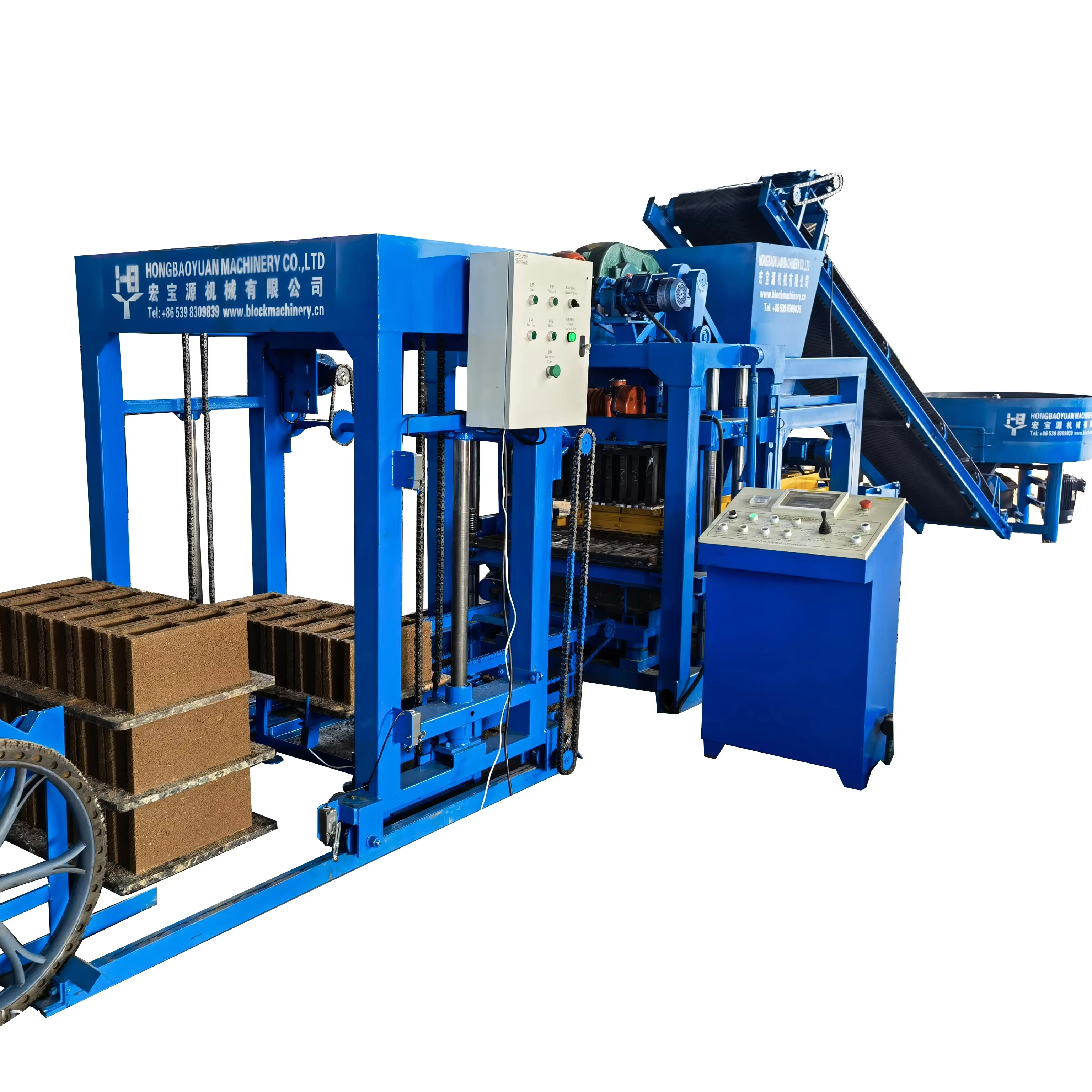
The push toward urban living and new infrastructure is really boosting the need for standard concrete blocks across all kinds of buildings. Looking at numbers from last year, around 40% of these blocks went into homes, mostly because governments keep pushing for cheaper housing options and there's been a surge in building individual houses. Meanwhile, businesses are also grabbing onto concrete blocks for their stores, offices, and community centers. The market here has grown by about 18% every year recently, since contractors want something that doesn't break the bank and gets built quickly. Medium sized block manufacturing equipment plays a big role in meeting this demand, producing everything from hollow blocks to pavement stones and walls that hold back soil. These machines help manufacturers create products that fit different construction requirements without too much hassle.
Faster Construction Needs and the Role of Concrete Blocks
With tight deadlines and persistent labor shortages, prefabricated concrete blocks have become essential for mid-sized contractors. Compared to traditional bricklaying, machine-made blocks reduce on-site assembly time by 30–50% while maintaining structural reliability. Their uniform size simplifies installation for foundations, partition walls, and fire-resistant barriers—key requirements for code-compliant commercial builds.
Performance Advantages of Machine-Made Blocks on Job Sites
The latest block making equipment achieves around 98% dimensional accuracy thanks to those automated vibration and compression systems we've been seeing lately. No more of those pesky inconsistencies that plague manual production methods. What does this mean for actual construction? Well, it results in consistently straight mortar joints and blocks that can handle compressive forces right up to 2500 pounds per square inch, which just happens to meet the ASTM C90 standard requirements. Field reports from contractors tell us there's about a quarter less material being sent back for replacement when using these machine made blocks instead of the old hand formed ones. That translates to real money saved on fixing mistakes and fewer headaches when projects run behind schedule because of defective materials.
Cost Efficiency and Return on Investment with Medium-Scale Block Machines
Medium-scale concrete block making machines offer a strategic balance between output capacity and operational expense, addressing core financial challenges in small-to-mid-sized construction.
Balancing Production Capacity and Operational Costs
Machines producing 1,000–5,000 blocks per day achieve 40% lower energy consumption than high-volume industrial systems while maintaining 85% utilization rates. Semi-automatic models cut labor needs by 60%, reducing workforce costs from $15/hour per worker to $6/hour per operator.
Achieving Cost-Effective Output Through Semi-Automation
Semi-automatic block machines generate 80% of the output of fully automated systems at half the initial investment—typically $18,000–$35,000 versus $55,000–$120,000. Operators can produce over 3,000 blocks daily with density variations under 1.5%, minimizing waste and reprocessing expenses.
Profit Potential for Small and Medium Producers
A 2024 case study of Kenyan manufacturers revealed annual profit increases of $36,500 after defect rates dropped from 19% to 2.8% using automated quality controls. Most operations achieve return on investment within 18 months through reduced labor and material waste.
Real-World ROI: Insights from Industry Case Studies
Mid-sized producers report cumulative savings of $1.2 million over five years, driven by:
- 60% reduction in labor costs ($280,000/year)
- 22% decrease in cement waste
- 98% on-time project completion due to reliable block supply
Enhanced Production Speed and Operational Efficiency
Modern concrete block making machines enhance workflow efficiency for mid-sized projects by boosting production rates and streamlining operations. These systems enable contractors to produce 800–1,500 blocks daily with dimensional tolerances within ±2mm—critical for meeting tight construction schedules.
Labor Reduction Through Automation
Automation reduces labor costs by 50–70% compared to manual methods, as intelligent systems manage feeding, compression, and curing with minimal oversight. A 2023 study on manufacturing automation confirmed that semi-automatic machines require only 2–3 operators per shift without sacrificing output.
Minimizing Material Waste with Precision Batching and Molding
Integrated sensors and programmable logic controllers (PLCs) achieve 93–96% material utilization by dynamically adjusting water-cement ratios and vibration intensity. This level of control prevents over-pouring and defects—common sources of waste in hand-operated processes.
Semi-Automatic vs Fully Automatic Systems: Optimal Fit for Mid-Sized Operations
While fully automatic machines produce 25–30% more blocks per day, semi-automatic models deliver 85% of that capacity at 40% lower capital cost. This makes them ideal for contractors seeking scalable growth without overextending budgets, particularly when expanding operations incrementally.
Consistent Quality and Long-Term Durability of Machine-Made Blocks
Dimensional Accuracy and Uniformity in Medium-Scale Production
Machine-made blocks maintain dimensional tolerances within ±1.5mm, reducing mortar gaps and accelerating build times. This consistency eliminates the 12–15% material waste typical in manual production and ensures compatibility with modular construction techniques.
Strength and Structural Integrity of Concrete Blocks
Automated machines apply compaction forces of 18–25 MPa, resulting in blocks with compressive strengths of 15–35 MPa—40–65% higher than hand-poured alternatives. Third-party testing shows these blocks exhibit 92% fewer cracks after 50 freeze-thaw cycles, ensuring long-term durability and compliance with ASTM C90 standards for load-bearing walls.
Standardized Manufacturing for Reliable Quality Control
Modern block manufacturing equipment now incorporates feedback loops that constantly check things like mixture thickness, air moisture during curing, and machine vibrations as they happen. Recent research from last year showed pretty impressive results too these systems lowered defects by almost two thirds while saving companies around four fifths of their usual inspection time. This consistency helps factories maintain stable output levels and stay compliant with those important ISO standards many clients require. What's really useful is how operators can save the best machine settings and pass them on between different shifts. So even when new staff come on board or experienced workers take days off, the product quality stays pretty much the same throughout production runs.
Scalability and Versatility of Medium Concrete Block Making Machines
Medium concrete block making machines are designed to adapt to changing project demands while preserving cost efficiency. They bridge the gap between small-scale manual setups and large industrial lines, offering a practical path to sustainable growth.
Producing Diverse Block Types for Varied Construction Needs
The machines come with fast mold change capabilities, so switching from hollow blocks to paving stones, curbs or those fancy interlocking designs happens pretty much without stopping production. Contractors love this because their modular tooling system lets them switch out molds in less than 15 minutes flat. That kind of speed makes all the difference when working on both residential neighborhoods and bigger infrastructure jobs at the same time. Most standard setups can manage around 8 to 12 different block varieties, but if someone needs something really special, there are advanced models available that handle upwards of 20 different types. This gives architects and designers plenty of creative freedom without breaking a sweat during production runs.
Matching Machine Type to Project Scale and Output Goals
Semi-automatic systems dominate mid-sized operations, producing 800–1,500 blocks daily with just 2–3 workers. This output aligns well with phased housing developments requiring 5,000–10,000 blocks per stage. For contractors managing multiple remote sites, mobile units reduce transportation costs by 30–40% compared to centralized production.
Future-Proofing Investment: Balancing Upfront Cost and Growth Potential
The scalable design means operators can start off with basic models costing around $25k to $45k upfront, then upgrade later with extra bits like vibrators or stackers when their workload increases. According to market research from last year, those working on mixed-use projects combining commercial and residential buildings typically get their money back within about 14 to 18 months. What's really handy though are the dual power choices available electric or diesel which helps shield businesses from wild swings in fuel costs. This becomes super important for companies operating in areas where electricity supply isn't reliable, because they won't be stuck waiting for power cuts to fix themselves before getting work done.
Frequently Asked Questions (FAQ)
What are the key benefits of using machine-made concrete blocks?
Machine-made concrete blocks offer improved dimensional accuracy, reduced labor costs, decreased material waste, and enhanced structural reliability compared to manually made blocks.
How do medium-scale block machines contribute to construction efficiency?
Medium-scale block machines enhance construction efficiency by reducing energy consumption, minimizing labor needs, and delivering consistent block quality with lower defect rates.
What types of projects are ideal for medium concrete block making machines?
Medium concrete block making machines are ideal for residential and commercial projects, particularly those requiring scalable growth and cost-effective block production.
How do manufacturers ensure consistent block quality?
Modern block manufacturing equipment utilizes advanced technologies like automated feedback loops and programmable logic controllers for precise control over production parameters, ensuring consistent block quality.
Are semi-automatic machines more cost-effective than fully automatic systems?
Yes, semi-automatic machines typically offer a more cost-effective solution for medium-sized projects by providing a balance between production capacity and investment cost.
Table of Contents
-
Meeting the Demand for Concrete Block Making Machine in Small to Mid-Sized Construction
- Key Applications Driving Growth in Residential and Commercial Projects
- Faster Construction Needs and the Role of Concrete Blocks
- Performance Advantages of Machine-Made Blocks on Job Sites
- Cost Efficiency and Return on Investment with Medium-Scale Block Machines
- Balancing Production Capacity and Operational Costs
- Achieving Cost-Effective Output Through Semi-Automation
- Profit Potential for Small and Medium Producers
- Real-World ROI: Insights from Industry Case Studies
- Enhanced Production Speed and Operational Efficiency
- Consistent Quality and Long-Term Durability of Machine-Made Blocks
- Scalability and Versatility of Medium Concrete Block Making Machines
-
Frequently Asked Questions (FAQ)
- What are the key benefits of using machine-made concrete blocks?
- How do medium-scale block machines contribute to construction efficiency?
- What types of projects are ideal for medium concrete block making machines?
- How do manufacturers ensure consistent block quality?
- Are semi-automatic machines more cost-effective than fully automatic systems?