
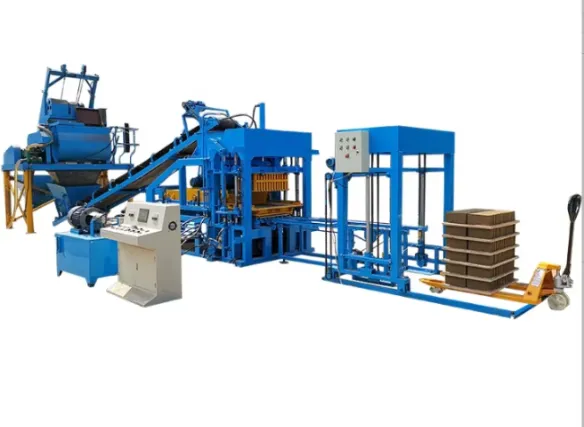
Precision Engineering and Automation for Minimal Material Waste About Concrete Block Making Machine
Controlled feeding mechanisms ensure exact concrete dosage per mold
The latest concrete block manufacturing equipment now incorporates laser guided volumetric feeders that can measure ingredients within half a percent accuracy. This is a huge improvement over traditional methods where operators often ended up with anywhere from 7 to 12 percent extra material just from guessing measurements. Smart sensors constantly check the ratio between aggregates and cement during production, making automatic adjustments so blocks stay dense enough without getting mixed wrong. What this means for manufacturers is less wasted raw materials right from the start, plus every batch comes out looking and performing pretty much the same way each time they run the machine.
Precision manufacturing reduces defects and scrap rates by up to 30%
Steel molds machined using CNC technology with a tight 0.02mm tolerance create blocks that are all pretty much the same size. This has made a real difference in quality control too. A recent report published in Sustainable Manufacturing Review back in 2024 showed that after switching from manual to automated production, the number of rejected blocks dropped from around 8.2% down to just 5.7%. The factories now have these smart AI vision systems installed throughout their lines. These systems spot any flaws on the surface of the blocks and send only those faulty ones off for recycling instead of tossing out whole batches. This approach cuts down on waste materials dramatically compared to what was happening before.
Optimized material usage cuts raw material costs significantly
Smart software now figures out just how much material goes into each block design, which cuts down on cement usage somewhere between 18 to 22 percent when compared with old school techniques. The compaction process works dynamically too, hitting those strength targets around 3,500 psi mark while needing about six percent fewer aggregates overall. Cement has gotten quite expensive lately, jumping up roughly 14% across the globe back in 2023. So all these little improvements actually start adding up fast for companies. We're talking about saving around a quarter of what they spend yearly on raw stuff simply because batches turn out more consistent than before.
Automation minimizes human error and over-pouring in block production
Robotic arms pour concrete with 99.8% positional accuracy–surpassing the 92% accuracy of manual operations–while PLC-controlled vibration tables eliminate density variations responsible for 23% of quality failures in semi-automated systems (2022 Construction Robotics Report). Error-proofing systems automatically correct misaligned molds before casting, preventing the 740 kg/hour material loss seen in non-automated facilities.
Maximizing Output Through Continuous and Scalable Automated Production
Continuous Operation Cycles Increase Overall Production Efficiency
Automated concrete block making machines enable 24/7 production by synchronizing mold filling, compaction, and ejection via PLC systems and advanced vibration technology. This integration reduces idle time by 40% compared to semi-automatic models. Continuous workflows allow factories to produce 1,200–1,500 standard blocks per hour without interruption for reloading or adjustments.
Hydraulic Systems Enhance Speed and Consistency in Block Formation
Hydraulic drives working under high pressure typically run between 200 to 300 BAR pressure levels, creating blocks with consistent density within around 10 to 15 seconds for each cycle. The speed and accuracy of this compaction process gets rid of those pesky air pockets and surface imperfections that plague many manufacturing runs. Factories report about a 22 percent drop in rejected products when switching from traditional methods, while production volumes actually double compared to what workers can manage manually. Another benefit comes from dual action cylinders which extend the life of molds significantly. Mid sized operations often save somewhere close to twelve thousand dollars every year just on replacing worn out molds alone, according to industry reports.
Integrated Automation Enables Scalable Output for High-Demand Projects
With modular automation systems, factories can ramp up production when there's a sudden spike in orders simply by setting up additional production lines side by side. The setup lets them boost daily output somewhere between 5k and maybe around 20k units depending on how many extra parts they install like those feeding mechanisms, moving belts, and drying stations without touching the main machines themselves. These smart sensors connected to the internet really help keep things running smoothly as they constantly tweak how materials move through the system and balance workloads across different machines. What this means is that product quality stays pretty much the same even when everything is cranked up to maximum speed during busy periods.
Consistent Quality via Controlled Vibration, Pressure, and Density Management
Controlled Vibration and Pressure Ensure Uniform Block Density
Vibration systems that are finely tuned along with heavy duty hydraulic presses can exert pressures reaching around 600 tons, which helps get rid of those pesky air bubbles when compacting materials. The programmable logic controllers come packed with sensors that monitor things in real time, so they tweak both how often and how long the vibrations happen automatically. This keeps the density pretty consistent throughout different production runs, typically staying within plus or minus 1.5%. What does this mean for manufacturers? Well, it cuts down on waste significantly. Factories report about a third less scrap material compared to older semi automatic approaches. And when it comes to defects, these advanced systems hit an impressive mark of just over three defects per million blocks produced, putting them at the forefront of quality standards in the industry.
High Consistency Reduces Post-Production Rework and Quality Failures
Laser-based inspection systems detect sub-millimeter deviations, cutting quality-related rejects by 35% compared to manual checks. The resulting uniformity helps manufacturers meet ASTM C90 compressive strength standards reliably and reduce rework costs by $18 per pallet. Projects using machine-produced blocks report 31% fewer delays due to material inconsistencies.
Sustainability and Cost Savings: Lower Waste, Higher ROI
Use of Recycled Aggregates Supports Circular Economy and Green Building Standards
Today's block making equipment can handle anywhere from 30 to 50 percent recycled materials like broken up concrete, industrial slag, or fly ash from power plants. This cuts down on the need for brand new raw materials and helps reduce what ends up in landfills. The practice actually lines up pretty well with LEED v4.1 standards for materials and resources. A recent study in 2023 looked into this whole circular economy thing and discovered something interesting. Construction sites that used blocks made with recycled content got their permits approved about 18% quicker than others. Why? Because these projects naturally met those local government requirements for sustainable building practices that many municipalities have started enforcing lately.
Environmental Impact Reduction Through Minimized Waste and Energy Use
Automated systems consume 22% less energy per unit than legacy models, thanks to servo-driven hydraulics and optimized cycles. Precision dosing reduces raw material waste by up to 28% (Institute of Sustainability Studies, 2023), while integrated moisture and vibration controls cut water usage by 15,000 liters daily in high-output plants–significantly lowering environmental impact.
Long-Term Cost Savings and Improved Project ROI From Reduced Waste
Automation delivers measurable financial returns by minimizing waste and rework:
- 20% lower material costs over a 5-year operational lifespan
- 12–18% reduction in energy expenses through efficient servo motors
- $8,400 annual savings per machine from reduced disposal fees
These efficiencies contribute to an average ROI period of 14–18 months, enabling manufacturers to reinvest in scalable capacity upgrades.
Real-World Impact: Case Study of Tancheng County Hongbaoyuan Machinery Co Ltd
Advanced concrete block making machines boost output by 40%
Tancheng County Hongbaoyuan Machinery Co Ltd increased daily production by 40% after upgrading to automated systems. Precision controls enabled uninterrupted operation and accurate material ratios, eliminating mold overfills that previously wasted 12% of raw inputs. Servo-driven feeding and real-time monitoring minimized human error, optimizing throughput while maintaining required block density.
Data shows 28% reduction in material waste within six months
According to the 2023 Construction Materials Efficiency Report, a six month trial run revealed that raw concrete waste dropped by nearly 28% when using automated systems instead of traditional manual techniques. What made this possible? Controlled vibration combined with pressure sensors that kept compaction levels remarkably consistent across batches, staying within just half a percent variance most of the time. The financial benefits were pretty impressive too. Companies saved around $18,600 each month on materials alone. These numbers show why so many construction firms are investing in modern concrete block making equipment these days. Not only does it boost production rates, but it also helps cut down on waste, which matters a lot for projects aiming to meet green building standards while keeping costs under control.
FAQ
What are the benefits of using laser guided volumetric feeders in concrete block manufacturing?
Laser guided volumetric feeders ensure precise measurement of ingredients, reducing the wastage of raw materials and ensuring consistency in every batch of blocks produced.
How does automation reduce defects and scrap rates in block production?
Automation incorporates AI vision systems and precision technology, which significantly lowers the percentage of defective blocks and reduces wastage by identifying faults early and recycling only the flawed blocks.
What is the role of robotic arms in block production?
Robotic arms ensure high positional accuracy in pouring concrete, significantly reducing manual errors and over-pouring, thus minimizing material loss.
How do modular automation systems enhance scalability?
Modular automation systems allow factories to increase production by setting up additional lines without altering main machinery, thus catering to high-demand periods effectively.
How do factories cut down on environmental impact using advanced systems?
Automated systems reduce energy and water usage, incorporate recycled materials, and minimize raw material waste, significantly lowering the overall environmental footprint.
Table of Contents
- Precision Engineering and Automation for Minimal Material Waste About Concrete Block Making Machine
- Maximizing Output Through Continuous and Scalable Automated Production
- Consistent Quality via Controlled Vibration, Pressure, and Density Management
- Sustainability and Cost Savings: Lower Waste, Higher ROI
- Real-World Impact: Case Study of Tancheng County Hongbaoyuan Machinery Co Ltd
-
FAQ
- What are the benefits of using laser guided volumetric feeders in concrete block manufacturing?
- How does automation reduce defects and scrap rates in block production?
- What is the role of robotic arms in block production?
- How do modular automation systems enhance scalability?
- How do factories cut down on environmental impact using advanced systems?