
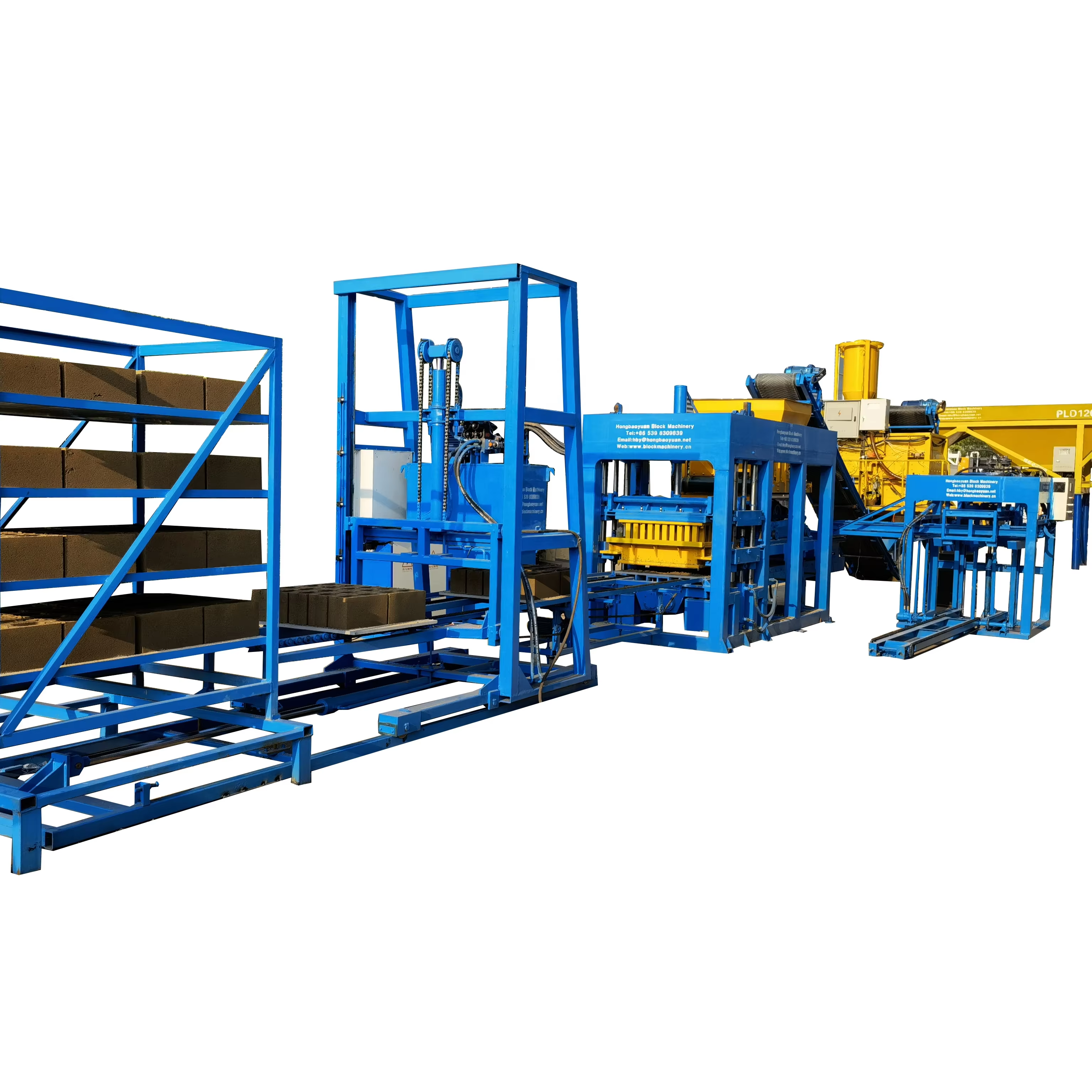
Automation and Technological Advancements in Concrete Block Making Machines
The rise of programmable logic controllers (PLCs) in block production
Modern concrete block making machines utilize programmable logic controllers (PLCs) to replace manual oversight, enabling precise control over vibration intensity, mold alignment, and curing cycles. This automation reduces material waste by up to 60% compared to traditional methods (Ponemon 2023) while ensuring consistent block density—essential for load-bearing applications.
Impact of automated systems on production speed and efficiency
Automation has increased output rates by 15—20× in standardized manufacturing. Integrated systems synchronize aggregate dosing, mixing, and pressing into continuous cycles, achieving speeds exceeding 1,500 blocks per hour. Case studies show this scalability meets the demands of large urban infrastructure projects without sacrificing quality.
Use of robotics in concrete block manufacturing for precision and scalability
Robotic arms and vision-guided systems deliver sub-millimeter precision, maintaining dimensional tolerances within ±0.8mm—critical for interlocking pavers and retaining walls. Six-axis robots handle repetitive tasks like mold lubrication and stacking, cutting labor costs by 40—50% in high-capacity facilities.
Recent advances and digital integration in modern block making machines
IoT sensors and predictive maintenance algorithms optimize energy use and minimize downtime. Real-time moisture monitoring adjusts curing parameters automatically, while digital twins simulate production scenarios to prevent defects. These innovations support lean manufacturing, helping developers reduce project timelines by 18—22% through just-in-time delivery.
Improved Production Efficiency and Labor Optimization in Urban-Scale Construction
Accelerated Production Speed and Scalable Output for Large Urban Projects
Modern machines produce 2,000—5,000 blocks daily—8—10× faster than manual methods—by automating mixing, molding, and curing stages. This output supports massive projects like metro systems requiring over 50 million blocks annually. Modular construction using automated block production shortens urban infrastructure timelines by 30—50%, according to industry analyses.
Labor Reduction and Manufacturing Efficiency in Automated Concrete Block Production
Automation reduces workforce needs by 40—60% by consolidating material handling, inspection, and palletizing into robotic workflows. A 2023 analysis of high-density housing found labor costs dropped from $18.50 to $7.20 per square meter after adopting automated systems. This reflects broader trends where prefabrication cuts workforce dependency by 52% while improving consistency.
Precision Engineering and Structural Quality of Machine-Made Concrete Blocks
Uniformity and Structural Integrity of Machine-Made Concrete Blocks
PLC-controlled machines achieve ±1mm dimensional accuracy, eliminating the ±15% variability seen in hand-cast units. They consistently produce blocks with 25—35 MPa compressive strength, compared to 12—28 MPa in manual production. A 2023 structural audit showed machine-made blocks had 92% fewer failures, validating their reliability in seismic zones.
Superior Consistency and Dimensional Accuracy Through Automation
Closed-loop moisture sensors and dual-axis vibration systems reduce air pockets by 74% and ensure 98% dimensional accuracy. PLC-regulated curing maintains humidity within ±2%, preventing thermal cracks that affect one in five manually cured blocks. This consistency is vital for interchangeable components in highway barriers and modular housing.
Case Study: High-Rise Construction Using Precision-Engineered Blocks
A 40-story residential tower in Singapore used interlocking machine-made blocks to accelerate assembly by 33%. The project achieved zero material waste—versus 8—12% in conventional builds—thanks to tight quality controls. Post-construction evaluation confirmed sustained performance under 150 km/h wind loads, demonstrating the viability of precision-engineered blocks in tall structures.
Design Versatility and Customization Capabilities of Concrete Block Making Machines
Producing diverse block types using interchangeable molds
Quick-change mold systems allow operators to switch between hollow blocks, interlocking pavers, and decorative facades in under 30 minutes. This adaptability enables contractors to meet varied project requirements—from structural walls to landscape features—without changing equipment. Latest-generation machines improve mold alignment, reducing material waste by 37%.
Customization for architectural aesthetics and functional requirements
Texturing tools and pigment injectors make it possible to customize surfaces without breaking the bank, whether for looks or function. According to some industry research I came across recently, around 8 out of 10 city projects need at least two different block styles just to keep things looking cohesive throughout the neighborhood. What's really interesting though is how adaptive compression molding works these days. Manufacturers can actually produce everything from noise reducing walls to insulated dividers and even drainage friendly retaining walls all on the same equipment setup. This flexibility helps architects and planners incorporate local character into their designs while still working within budget constraints.
Sustainability and Environmental Impact of Modern Concrete Block Production
Reduction of Carbon Footprint With Recycled Materials and Low-Carbon Technologies
These days, many machines are starting to use recycled stuff like broken concrete and glass instead of new materials. According to brick-machine.com from last year, this switch can cut down on emissions related to materials by around 28%. There's also something called accelerated carbonation curing that actually locks away between 30 and 50 kilograms of CO2 for every ton of cement produced, which means the manufacturing process itself becomes somewhat of a carbon trap. And then we have geopolymer binders too. They manage to slash the amount of carbon built into products by about 40 to 60 percent without sacrificing strength much at all, typically keeping it well over 35 MPa. Pretty impressive when you think about it.
Environmental Benefits Through Reuse of Industrial Byproducts Like Fly Ash
Manufacturers now substitute 25—40% of cement with fly ash and slag, diverting over 12 million metric tons of industrial waste from landfills annually. Research shows fly ash-enhanced blocks achieve 28-day compressive strengths 15% higher than conventional mixes, with 22% lower water permeability—offering both environmental and performance advantages.
Support for Eco-Friendly Construction and Green Building Certifications
Automated production supports green building standards like LEED v4.1 and BREEAM by enabling credits for:
- Material reuse (MRc2): 30—100% recycled content
- Regional materials (MRc5): 80% reduction in transport emissions via localized manufacturing
- Energy optimization: 18—22 kWh/ton efficiency in tier-4 compliant plants
Balancing Automation Energy Costs With Long-Term Sustainability Gains
While automated machines consume 15—25% more energy than manual systems, their precision reduces raw material waste by 60% and enables thinner, insulation-efficient designs. Over a 20-year lifecycle, these efficiencies yield significant gains:
| Factor | Improvement vs Manual Production |
|---|---|
| Material Efficiency | +52% |
| Construction Speed | +300% |
| Demolition Waste | -75% (due to standardized blocks) |
This systemic efficiency establishes automated block manufacturing as a cornerstone of net-zero urban development.
FAQ
What are PLCs and how do they benefit block production?
Programmable Logic Controllers (PLCs) are used to replace manual oversight in block production, offering precise control over various production processes, thus reducing material waste and ensuring consistent block density.
How do modern machines improve the production speed of concrete blocks?
Automation has increased production speed by synchronizing aggregate dosing, mixing, and pressing into continuous cycles, achieving speeds over 1,500 blocks per hour, thus meeting large-scale project demands.
What role do robotics play in concrete block manufacturing?
Robotics, including robotic arms and vision-guided systems, enhance precision and scalability in block production, handling repetitive tasks and reducing labor costs significantly.
How are sustainable practices incorporated in block production?
Block production incorporates sustainability through using recycled materials, reducing carbon footprint, utilizing byproducts like fly ash, and supporting green building certifications with automated processes.
Table of Contents
- Automation and Technological Advancements in Concrete Block Making Machines
- Improved Production Efficiency and Labor Optimization in Urban-Scale Construction
- Precision Engineering and Structural Quality of Machine-Made Concrete Blocks
- Design Versatility and Customization Capabilities of Concrete Block Making Machines
- Sustainability and Environmental Impact of Modern Concrete Block Production
- FAQ