
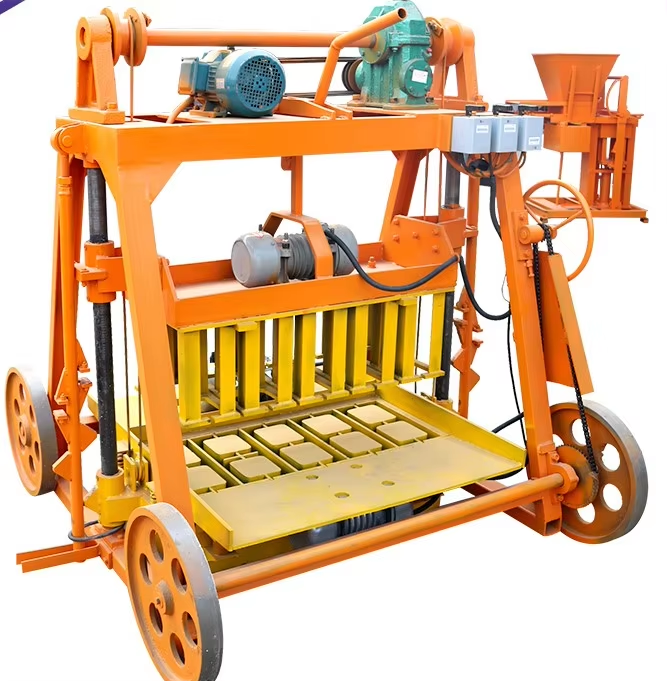
Cement Block Making Machine:Ensuring Structural Integrity and Quality Consistency in High-Density Projects
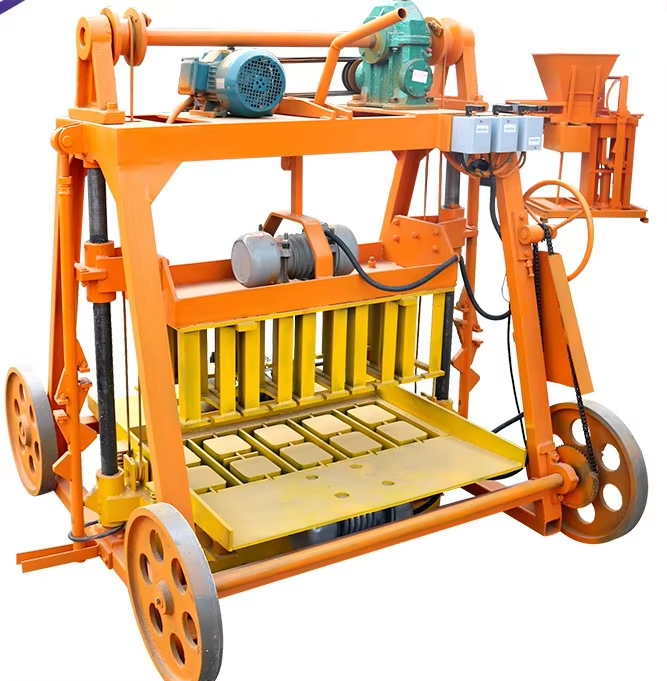
Precision engineering: How servo-hydraulic cement block making machines achieve ±1.5 mm dimensional tolerance for high-rise compliance
Today's servo hydraulic machines for making cement blocks offer something remarkable when it comes to size accuracy, keeping within about 1.5mm throughout entire production batches. For anyone building load bearing walls on skyscrapers, this kind of accuracy just isn't optional anymore. Small errors add up over time and can really mess with how strong the wall is, how evenly spaced those mortar joints are, and how weight gets distributed vertically. These machines come equipped with smart feedback systems that keep checking things like how runny the mix is and what the air humidity does while everything sets hard. What we end up with? Blocks that line up perfectly from bottom to top on buildings over thirty stories tall, no need for fixing them after they're made. This matters a lot in earthquake prone areas too because tiny differences between blocks get magnified when the earth starts shaking.
Meeting ASTM C90 and ISO 9001 standards—balancing speed, strength, and regulatory rigor in transit infrastructure
For transit systems, concrete blocks need to hit certain strength marks while still keeping production moving fast enough. Standards matter here - ASTM C90 sets a baseline at around 1,900 psi for compressive strength, and ISO 9001 wants all the paperwork tracked so auditors can check everything later. That's where automated block makers come into play. These machines have built-in controls that adjust things on the fly. Moisture sensors tweak the water mix as needed, compression tests happen automatically on about every 200th block, and smart systems fine tune vibrations to pack material tightly without creating tiny cracks. The result? Factories can churn out roughly 1,200 blocks each hour, and most pass quality checks right away about 98% of the time. Manual setups only get about 74% approval initially, so there's a big difference. Cities build their metro stations, platform walls, and overhead tracks knowing these blocks will hold up against massive weights over 500 tons and survive countless freezes and thaws without failing.
Accelerating Urban Project Timelines Through On-Site Production Scalability
From 800 to 3,200 blocks/hour: Real-world scalability of automatic cement block making machines in Tier-2 metro expansions
Cement block manufacturing equipment can scale production between roughly 800 and 3,200 blocks each hour, which helps match output to what's needed for different stages of construction projects. We've seen this work well in expanding cities such as Jaipur and Guadalajara where building multiple stations at once creates real challenges. The machines' flexibility means contractors don't get stuck waiting for materials when things heat up on site. They can deliver blocks just when they're needed without ending up with warehouses full of outdated stock. Operators adjust settings like how fast the machine cycles, how much pressure is applied during compaction, and how quickly the molds fill. These tweaks let them boost production rates significantly while still keeping the blocks within required dimensions and maintaining their structural integrity. Even when output jumps threefold, the quality doesn't drop off.
Supply chain integration: Cutting lead time by 40–60% via co-location with batch plants and ready-mix systems
Putting cement block manufacturing right next to concrete mixing facilities cuts down on waiting times for materials by around 40 to 60 percent, based on some recent industry research from the Global Cement & Concrete Association. When these operations work together, fresh concrete can go straight into blocks without waiting for it to set up too much, which saves time and keeps trucks from backing up at loading docks. What really makes this setup work well is how information flows back and forth between different parts of the process. Measurements like how runny the mix is, its temperature, and how much air it contains get sent automatically to computers controlling the machines, so they can tweak the recipe as needed. Companies that have tried this approach find they're able to use almost all their materials, about 98 percent actually, because leftover slurry gets turned into blocks instead of being thrown away. This not only reduces waste but also means fewer trips for haulers, cutting down on emissions and getting projects finished faster overall.
Driving Economic Efficiency with On-Site Cement Block Making Machines
Lifecycle cost analysis: 22% lower per-unit cost vs. off-site procurement—evidence from Nairobi’s affordable housing program
Looking at the full cost picture from Nairobi's main affordable housing initiative, it turns out that having cement block makers right on site cuts down what each block costs by about 22% when compared to buying blocks made elsewhere. Where does this money saving come from? Well, first there's no need to transport materials anymore, which alone saves around 15 to 18% off what builders usually spend on materials. Then there's less damage during handling since fewer blocks get rejected - sometimes as much as 40% fewer! And because they make blocks just when needed for construction phases, companies don't have to store huge inventories either. The numbers tell another story too. Operational stats reveal these onsite systems actually use resources 30% better than traditional methods. How? By constantly adjusting mix formulas and production amounts based on real time needs. This means the initial investment pays itself back pretty fast. Most building projects get their money back within just 12 to 18 months thanks to these ongoing savings.
Enabling Sustainable Urban Development Through Versatility and Resource Optimization
Modern cement block making machines are pivotal in sustainable construction, offering both adaptability and eco-efficiency.
Multi-block adaptability: Interlocking, lightweight, and paving solutions from a single cement block making machine platform
One automated machine setup actually makes several different types of blocks at once. We're talking about interlocking units for earthquake resistant walls, lighter versions with insulation properties for building exteriors that save energy, plus special paving stones that let water pass through them for better stormwater control. And here's what makes it really cool these days - no need to change any hardware between production runs. What this means in practice is companies don't have to invest in multiple specialized machines anymore. The cost savings are pretty substantial too, cutting down initial investments by around 35%. Plus when working on big city projects where things tend to change halfway through, having this flexibility allows designers to tweak their plans as needed without getting stuck with outdated equipment.
Carbon reduction and circularity: 31% lower embodied carbon vs. clay bricks; seamless use of 40% recycled aggregate feedstock
Studies from the Construction Materials Journal in 2023 show that automated on site manufacturing slashes carbon emissions by around 31% compared to traditional fired clay bricks. The process uses advanced vibrating machines and high frequency compactors which keep everything structurally sound even when mixing in as much as 40% recycled building materials from old construction sites. What this means is we can take all those demolition wastes and turn them into proper building components that meet certification standards. By creating these closed loop systems, cities cut down on how much trash ends up in landfills, reduce the need for new quarries, and build local economies where materials get reused again and again. This matters a lot in big urban areas that are expanding fast but running out of space for both waste disposal and raw material extraction.
FAQ
How do servo-hydraulic machines ensure block accuracy? Servo-hydraulic machines incorporate smart feedback systems that continuously monitor factors like mix consistency and setting conditions to maintain precision within ±1.5 mm.
What standards are critical for cement block production? ASTM C90 specifies the compressive strength requirements, and ISO 9001 focuses on maintaining documented processes to ensure quality and compliance.
How does on-site block production cut costs? On-site production reduces transportation costs, minimizes handling damages, and improves resource utilization, cutting the per-unit cost by about 22% compared to off-site procurement.
What environmental benefits do modern block making machines offer? They lower carbon emissions by 31%, use up to 40% recycled materials, and help create sustainable construction practices through adaptability.
Table of Contents
- Cement Block Making Machine:Ensuring Structural Integrity and Quality Consistency in High-Density Projects
- Accelerating Urban Project Timelines Through On-Site Production Scalability
- Driving Economic Efficiency with On-Site Cement Block Making Machines
- Enabling Sustainable Urban Development Through Versatility and Resource Optimization