
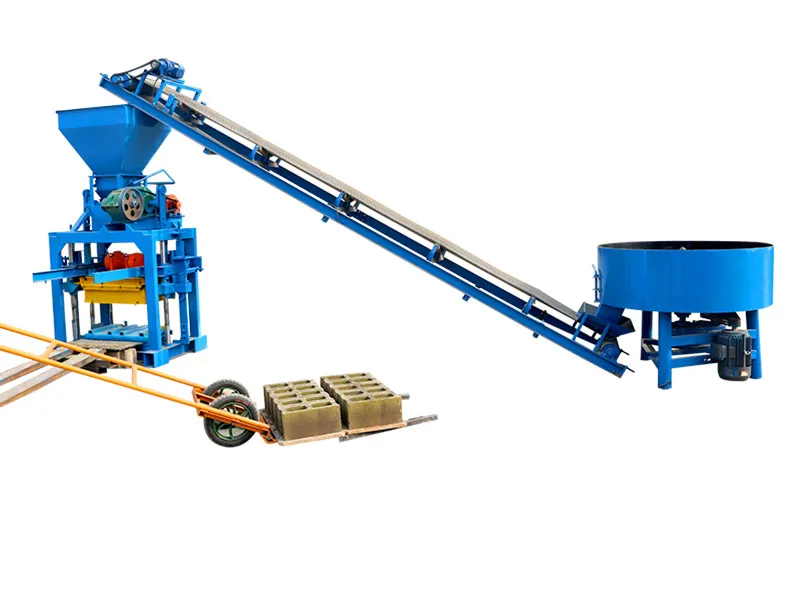
Precision-Driven Concrete Block Making Machine for Structural Integrity & Quality Consistency
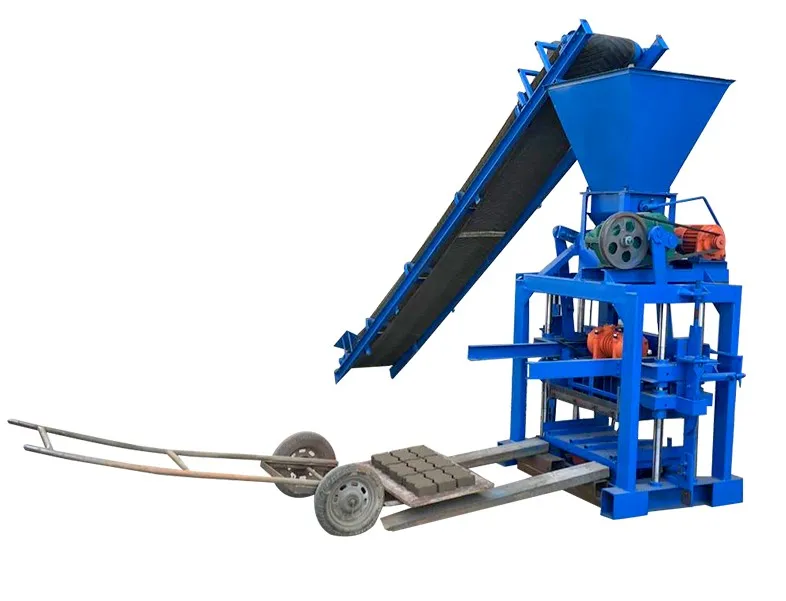
How precise compaction ensures uniform density and load-bearing reliability
Concrete block makers that work with high precision use just the right amount of pressure when compacting materials, which gets rid of those pesky air pockets and gaps that can weaken structures later on. When blocks have the same density throughout, they hold up better under pressure, meaning each unit can actually support more weight. Studies indicate that if there's more than a 5% difference in density between blocks, their ability to handle loads drops by as much as 30%, according to ASTM standards from 2023. The machines also control vibrations carefully so the mix stays uniform, preventing the cement and aggregate from separating out. This kind of consistency makes buildings safer and more reliable over time, something that becomes really important in taller constructions where every single block contributes to how well the whole structure stands up against stress and strain.
Eliminating dimensional variance: why ±1mm tolerance matters for mortar efficiency and wall stability
Getting the dimensions right makes a big difference in how well buildings go up and hold together. Modern machines that keep blocks within about 1mm on all sides let builders create mortar joints thinner than 10mm. This cuts down on mortar needed by roughly 20% and speeds up brick laying work by around 15%, according to research published last year in Construction Materials Journal. What matters even more is when blocks fit together perfectly stack after stack. When they don't, small misalignments add up over time and weaken the wall's ability to resist sideways forces. Blocks with tolerances over 3mm are much more likely to develop cracks during earthquakes, studies show about a 40% higher risk. Walls built with tight dimensional control also perform better thermally and stay drier because there are fewer gaps for heat loss or water penetration.
Cost Efficiency and Project Timeline Advantages of a High-Precision Concrete Block Making Machine
High-precision concrete block making machines deliver measurable cost and timeline benefits through engineering excellence. By minimizing dimensional deviations and material inconsistencies, these systems transform project economics from foundation to completion.
Reducing material waste, rework, and labor costs via repeatable accuracy
Precision engineering eliminates over-pouring and defective blocks, curbing three major expenses:
- Material waste reduction of 12–18% by ensuring exact mix volumes per block (NIST IR 8426, 2023)
- Near-zero rework costs by achieving 99.5% compliance with ASTM C90 standards
- 30–50% lower labor expenditures through automated quality control versus manual inspection
Faster cycle times and scalability without compromising block quality
Automated high-precision machines accelerate production while sustaining tolerances under ±1mm:
- 20–30% faster cycle times via synchronized vibration, molding, and ejection systems
- Linear output scaling: Doubled production volume with identical block integrity
- Mortar application efficiency gains of 15% from dimensional uniformity
Industry studies confirm projects using precision equipment finish 18–22 days sooner per 100,000 blocks while reducing total costs by $7,400–$9,100 (Construction Productivity Council, 2023).
Automation and Smart Control: Enhancing Reliability in Concrete Block Making Machine Operations
Automated batching, vibration, and ejection systems significantly reduce human error in concrete block production. By standardizing material mixing and compaction forces, these systems ensure uniform density—a foundational requirement for structural integrity. Precise automated ejection further prevents handling damage during demolding, minimizing rejected units and rework.
Automated batching, vibration, and ejection minimizing human error
The combination of integrated sensors along with programmable logic controllers, commonly known as PLCs, ensures that material dosing stays accurate within just 1% tolerance. This setup basically eliminates those pesky manual measurement variations that can throw off production quality. When it comes to compaction, dual axis vibration systems do all the heavy lifting. They apply these calibrated forces consistently across the board, which means we get optimal density every time without needing someone standing there watching the process. And let's not forget about those automated ejection arms. These mechanical helpers lift away the cured blocks without causing any surface abrasion at all. The result? Handling defects drop dramatically, somewhere around 90% less than what happens with traditional manual techniques. Pretty impressive when you think about it.
Real-time diagnostics and adaptive control for consistent output under variable conditions
Today's equipment uses IoT monitoring systems that spot problems as they happen. If the air gets too humid or dry, moisture sensors kick in and tweak the water to cement mix ratio in about half a second. The machine also adjusts how hard it vibrates based on what size gravel or sand is being used, which helps keep the concrete strong enough when it sets. These automatic corrections mean parts stay pretty much the same size throughout manufacturing, even if conditions change around them. Most factories aim for about plus or minus 1 millimeter variation between batches, something these smart systems help achieve consistently.
Strategic Builder Independence: In-House Production and Supply Chain Resilience
Owning a high-precision concrete block making machine transforms builders into self-reliant producers—eliminating unpredictable supplier delays that stall projects. This operational independence shields workflows from external disruptions, whether material shortages, shipping bottlenecks, or geopolitical volatility. By vertically integrating production, builders gain three strategic advantages:
- Diversified sourcing, through direct control over raw material inputs
- Buffer stock creation, enabling absorption of demand surges without third-party markups
- Nearshoring equivalence, by manufacturing blocks on-site
These capabilities align with modern operational resilience frameworks that prioritize rapid adaptation to supply shocks. Internal production shrinks lead times from weeks to hours—turning supply chain vulnerabilities into competitive insulation against market volatility.
Selecting the Right Concrete Block Making Machine: Performance, Durability, and ROI Alignment
Evaluating precision engineering, service support, and total cost of ownership
Builders must prioritize precision engineering when selecting a concrete block making machine. Machines with tight tolerance controls (±1mm) reduce mortar gaps and structural weaknesses, directly translating to safer, longer-lasting walls. A 2023 construction materials study found projects using high-precision equipment reduced rework costs by 34% and accelerated timelines by 22%.
Equally critical is evaluating service support networks. Machines with remote diagnostics and regional technical teams minimize downtime—a major cost driver when production halts. Consider manufacturers offering training programs and guaranteed response times.
The most overlooked factor? Total cost of ownership (TCO). Beyond the sticker price, calculate:
- Energy consumption per 1,000 blocks
- Mold replacement frequency and costs
- Labor hours required for operation and maintenance
- Expected lifespan under your production volume
Leading contractors report that machines with 15% higher upfront costs but 30% lower TCO deliver payback within 18 months. Prioritize these metrics over brand names to secure both structural integrity and financial returns.
FAQs
Why is precise compaction important in concrete block making?
Precise compaction ensures uniform density in concrete blocks, which enhances their load-bearing reliability and structural integrity.
How does dimensional accuracy affect mortar efficiency?
Dimensional accuracy allows for thinner mortar joints, reducing mortar usage by about 20% and improving wall stability.
What are the benefits of automation in concrete block manufacturing?
Automation reduces human error, enhances reliability, and maintains consistent block quality through automated systems like batching, vibration, and ejection processes.
How does owning a high-precision concrete block making machine enhance builder independence?
Owning the machine provides builders with control over production, reducing dependency on external suppliers and improving supply chain resilience.
What should builders consider when selecting a concrete block making machine?
Builders should evaluate precision engineering, service support networks, and total cost of ownership to ensure financial returns and structural integrity.
Table of Contents
- Cost Efficiency and Project Timeline Advantages of a High-Precision Concrete Block Making Machine
- Automation and Smart Control: Enhancing Reliability in Concrete Block Making Machine Operations
- Strategic Builder Independence: In-House Production and Supply Chain Resilience
- Selecting the Right Concrete Block Making Machine: Performance, Durability, and ROI Alignment
-
FAQs
- Why is precise compaction important in concrete block making?
- How does dimensional accuracy affect mortar efficiency?
- What are the benefits of automation in concrete block manufacturing?
- How does owning a high-precision concrete block making machine enhance builder independence?
- What should builders consider when selecting a concrete block making machine?