
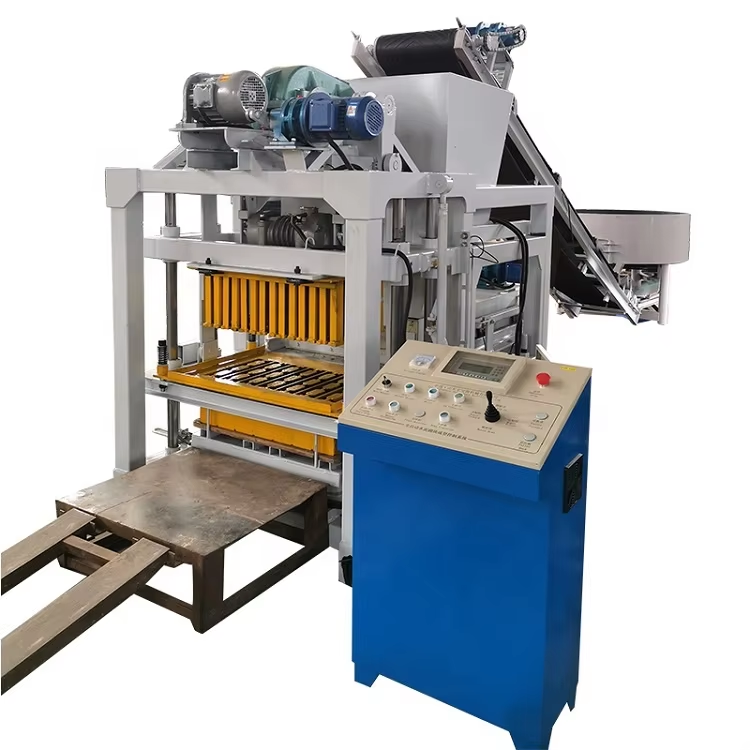
Concrete Block Making Machine:Optimized Hydraulic Pressure Control for Dimensional Precision and Consistency
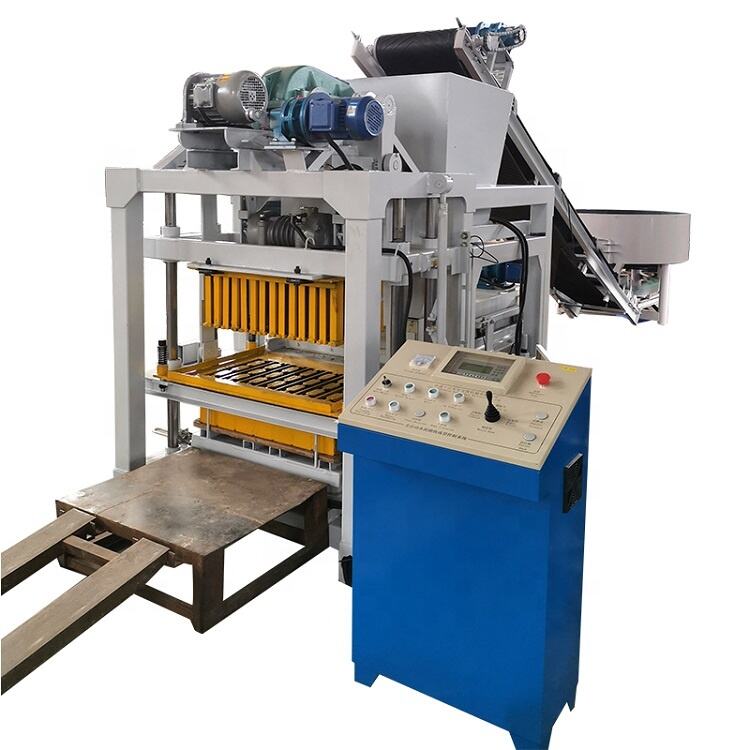
Calibrated Hydraulic Systems and Real-Time Pressure Feedback Loops
Today's concrete block makers can hit dimensional specs as tight as plus or minus half a millimeter thanks to their advanced servo hydraulics and closed loop feedback systems. These machines have pressure sensors that check the force applied every five milliseconds or so, which lets them tweak the pump output on the fly to maintain just the right compression level. This setup gets rid of those pesky calibration issues that creep in over time and handles all the natural differences between batches of materials without missing a beat. According to field tests, this technology cuts down size variations by around 15 percent when compared to old school mechanical presses, plus it saves quite a bit of energy that would otherwise be wasted through excessive pressure buildup.
The 8–12 MPa Compression Sweet Spot: Balancing Density, Strength, and Energy Efficiency
The industry generally agrees that around 8 to 12 MPa is where things work best when making concrete blocks. When pressures fall below 8 MPa, tests following ASTM C140 standards indicate roughly an 18 percent decrease in compressive strength on average. Going over 12 MPa brings problems too many plants face these days. Energy usage just keeps climbing while the density gains get smaller and smaller, plus there's that annoying microcracking issue that nobody wants. Getting precise control over hydraulic pressure helps keep operations within this ideal range most of the time. Blocks produced this way typically have about 22.4 MPa compressive strength according to verification tests, and manufacturers report saving approximately 30 percent on energy costs compared to older systems without proper regulation.
Enhanced Block Density and Compressive Strength Through Controlled Dwell Time
Hydraulic Dwell Time vs. Core Density: Validated via ASTM C140 Testing
The amount of time hydraulic pressure stays applied during compaction, known as dwell time, plays a major role in how particles move around and eliminate spaces between them. Getting this right usually takes about 2 to 5 seconds. At this optimal range, we see better packing of particles which cuts down on those pesky internal voids larger than half a millimeter. This results in cores that are denser by roughly 8 to 12 percent compared to what happens with inconsistent manual techniques according to tests done under ASTM C140 standards. And when materials become denser, they handle loads much better while also preventing tiny cracks from forming early on. The end result? A stronger finished product overall.
Field-Validated Performance: 22.4 MPa Avg. Strength in Medium-Scale Hydraulic Production
For medium scale operations, hydraulic machines that have been set up with proper dwell cycles tend to produce concrete blocks with around 22.4 MPa compressive strength. These actually beat the vibration only methods by somewhere between 17% and 21%. Why? Because these machines cut out all those little mistakes humans make. The hydraulic system applies pressure the same way each time through every single cycle. And this consistency means buildings meet the IS 2185-1:2005 standards for load bearing walls right off the bat. No need to keep testing each new batch separately which saves everyone a lot of time and hassle in practice.
Reduced Output Variability: Why Hydraulic Concrete Block Making Machines Outperform Manual Methods
Concrete block makers that use hydraulic technology eliminate all those pesky human factors like mixing ratios that go off track, compaction forces that aren't quite right, and curing times that vary too much. According to field tests done last year, blocks made manually tend to have dimensional errors over plus or minus 5 mm, but when machines take over, they stick pretty close to within 0.8 mm across different batches. The difference in density? Manual methods give us around 12% variation, while automation brings it down to about 3%. For compressive strength, we're talking about a range of 15 to 22 MPa with manual work, versus a much tighter window of 21 to 23 MPa when machines handle things. Fewer rejects too the rejection rate plummets by 90% and most products now meet structural standards 98% of the time. These machines adjust pressure on the fly to compensate for differences in aggregate materials, and their automated cycles produce blocks with exactly the same shape and texture no matter how many thousands get made. What used to require skilled hands is now built into the system itself through precise engineering controls.
Operational Reliability and Long-Term Quality Assurance in Medium-Scale Production
Predictive Maintenance Integration and Consistent Cycle-to-Cycle Reproducibility
Today's hydraulic concrete block makers come equipped with predictive maintenance features that use vibration sensors along with thermal imaging technology to keep an eye on important parts such as pump assemblies and valve banks. Finding problems early means no unexpected shutdowns and better machine performance over time. When paired with standard hydraulic pressure settings, these systems make sure each block produced looks pretty much the same as the last one, even after manufacturing thousands of units. Dimensional accuracy stays within about plus or minus 0.3 mm according to ISO 9001 standards. What does all this mean? Blocks maintain consistent strength throughout production runs, there are fewer mistakes made by workers, less waste from rejected products, and overall maintenance expenses drop significantly for factories of moderate size. Manufacturers really benefit from these improvements in both quality control and bottom line savings.
FAQ
What is the ideal pressure range for making concrete blocks?
The ideal pressure range is between 8 and 12 MPa, balancing density, strength, and energy efficiency.
How does dwell time affect block density and strength?
Dwell time, ranging from 2 to 5 seconds, optimizes particle packing, reducing internal voids and increasing core density, resulting in a stronger finished product.
Why do hydraulic machines outperform manual methods?
Hydraulic machines provide consistent pressure application, eliminating human errors and producing blocks with tight dimensional tolerance, reduced density variance, and higher compressive strength.
Table of Contents
- Concrete Block Making Machine:Optimized Hydraulic Pressure Control for Dimensional Precision and Consistency
- Enhanced Block Density and Compressive Strength Through Controlled Dwell Time
- Reduced Output Variability: Why Hydraulic Concrete Block Making Machines Outperform Manual Methods
- Operational Reliability and Long-Term Quality Assurance in Medium-Scale Production
- FAQ