Why a Concrete Block Making Machine Is the Core Enabler of Modern Brick Production
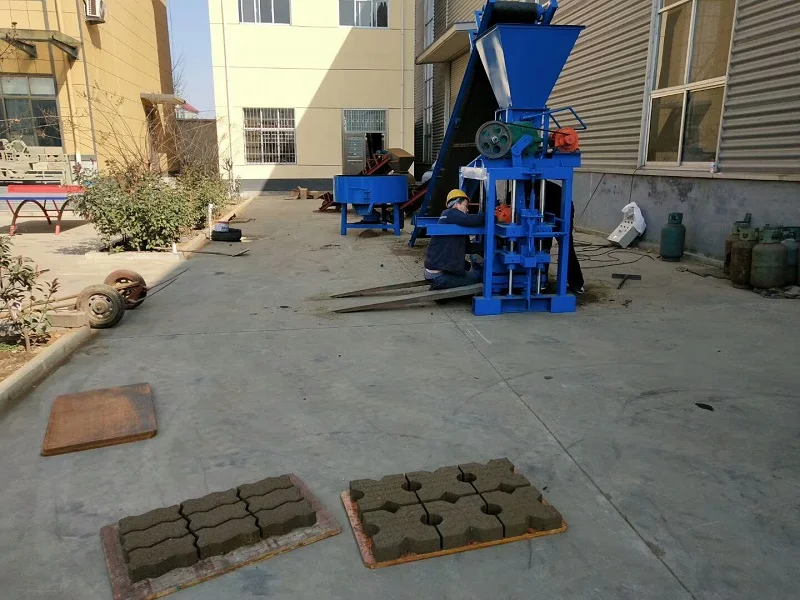
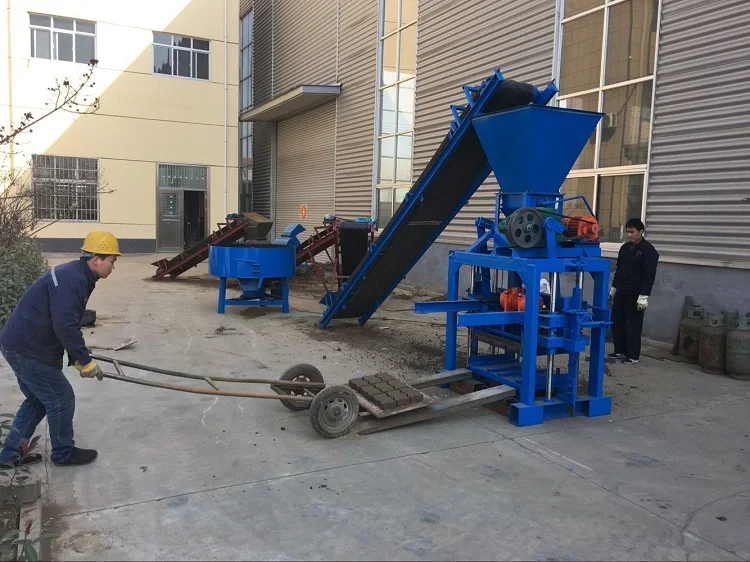
The construction industry today needs way more efficiency and accuracy than ever before, which is why concrete block machines have become essential for large scale brick production. These automated systems handle everything from mixing materials to filling molds and applying pressure all in one smooth process, churning out around 1500 identical blocks every single hour. According to some research from Ponemon back in 2023, this kind of setup boosts productivity by about twenty times what workers can manage when casting blocks by hand. Plus it gets rid of those pesky measurement inconsistencies that happen when people are doing the work manually.
The vibration calibration systems work alongside pressure controls to keep variations within about half a millimeter over thousands of production cycles. This helps maintain strong structural integrity throughout each manufactured unit. Moisture sensors built right into the system constantly tweak the cement water mix ratio, which keeps defects down to around 3% or less. That makes a big difference since wasted materials really eat into project profits. When companies combine the molding process, curing time, and quality checks all into one automated line, they can ramp up production volumes without needing to hire extra staff for every new batch. What used to be a slow, costly part of construction now becomes something that actually gives businesses an edge, particularly on projects where tight deadlines leave little room for error or delays.
Crucially, the technology’s modular architecture allows incremental integration with existing material-handling systems, avoiding factory-wide overhauls. Whether upgrading semi-automated lines or replacing manual labor entirely, the concrete block making machine delivers measurable ROI through accelerated throughput and eliminated rework costs.
Scalable Automation: Integrating the Concrete Block Making Machine into Existing Factory Workflows
Factories today are really struggling to keep up with demands for bigger production without messing up their regular workflows. Concrete block making machines actually help solve this problem because they allow companies to automate step by step, starting from what people do manually all the way to completely automatic processes. Most manufacturers begin with something halfway automated that takes care of simple molding tasks before moving on to fancier setups where robots handle materials and artificial intelligence checks product quality. This slow transition means no expensive shutdowns happen when upgrading equipment, plus there are benefits right away. Some companies who tried this method saw projects get started about 40 percent quicker during these changeover periods. What makes these machines so valuable is how adaptable they are for different situations. They work great whether a plant wants to update old assembly lines or build brand new facilities with cutting edge technology built in from day one.
From Manual Molding to Fully Automated Cycle: The Scalability Leap
Moving away from traditional brick manufacturing that relies heavily on manual labor needs careful planning in stages. Most plants start with semi-automated concrete block makers that take care of the main molding work, while staff still load materials manually during these early phases. Once operations run smoothly enough, facilities begin installing conveyor belts and computer controlled batching systems, which cuts down on hands-on labor by roughly two thirds according to industry reports. When companies are ready for complete automation, they bring in robotic arms to stack blocks and install smart sensors throughout the process to monitor density as it happens. This step-by-step method allows brick producers to ramp up to round-the-clock production within about ten weeks or so without breaking the bank, since investments can be made piece by piece rather than all at once.
Modular Integration with Material Handling and Curing Systems
Seamless compatibility with existing infrastructure is non-negotiable. Leading concrete block making machines feature standardized interfaces that connect directly to:
- Aggregate feeding systems via load-cell controlled hoppers
- Steam curing chambers with humidity-regulated environments
- Palletizing robots using universal mounting protocols
The plug and play setup really cuts down on those costly custom engineering jobs that eat into budgets. Factory floor supervisors have seen something interesting too: when materials vary slightly in quality, these integrated systems still keep rejection rates below 3%. How? The machines adjust their vibration frequencies based on how wet or dry the aggregate actually is. What makes this whole system stand out though is how everything connects back to main control panels. Operators can now watch over whole production lines right from one workstation screen, which saves them running all over the plant. Plus, it helps meet different local regulations across regions where plants operate, something that used to require extra paperwork and headaches for compliance teams.
Tangible Cost & Labour Optimization Through Concrete Block Making Machine Deployment
Labour Reduction: 12–15 Operators – 3–4 Skilled Technicians per Shift
Production lines equipped with concrete block making machines have really changed how many workers are needed on site. What used to take around 12 to 15 people working each shift can now be managed by only 3 or 4 techs who monitor the automated processes. The drop in staff numbers by about 70% comes down to smart automation taking care of things like mixing materials, shaping blocks, and stacking them onto pallets. Take a look at the numbers too: manual crews usually crank out about 500 blocks a day, whereas systems with some automation can knock out over 3,000 blocks with basically the same level of oversight. That's pretty impressive actually. And what happens to those workers who stay? They move into important jobs focused on maintenance and checking quality standards. This shift doesn't hurt production at all while actually raising the skill level across the board.
ROI Acceleration: 58–72% Lower Direct Labour Costs and 6–12-Month Payback
Switching to automated block manufacturing brings real money savings that most businesses find worth their while. Labour costs, which used to take up around a third of what companies spent running their operations, can drop dramatically between 58% and 72% when they cut staff numbers and streamline how things get done. Add to that about 15-20% better performance just from having machines handle materials instead of people, and many companies see their investment paid back within a year at most. Manual setups are always at risk because wages keep going up and finding skilled workers becomes harder every day. Automated systems fix those problems by keeping expenses steady no matter what happens in the market. As factories grow bigger and produce more blocks, these stable costs create space for profits to actually expand rather than getting eaten away by rising expenses.
Guaranteed Quality Consistency with Precision Control in Every Concrete Block Making Machine Cycle
Modern concrete block making machines integrate advanced control systems that eliminate human error, delivering uniform blocks with near-perfect dimensional accuracy. This precision ensures structural integrity in construction projects while minimizing material waste. Unlike manual methods where quality fluctuates, automated calibration maintains exact specifications across thousands of production cycles.
Hydraulic Pressure + Vibration Calibration for ±0.5 mm Dimensional Tolerance
Programmable hydraulic systems apply consistent compaction force while synchronized vibration tables remove air pockets at frequencies up to 4,500 RPM. This dual-action process achieves dimensional tolerances within ±0.5 mm—critical for interlocking blocks and load-bearing walls. Manufacturers report 85% fewer size-related defects compared to hand-casting methods, ensuring seamless installation and structural compliance.
Real-Time Moisture & Cement Ratio Monitoring to Maintain <3% Rejection Rate
Integrated IoT sensors continuously track:
- Water–cement ratios (±0.5% variance)
- Aggregate moisture levels
- Ambient humidity
Automated dispensers adjust material inputs within 0.3-second response times, preventing curing defects. This closed-loop system reduces rejection rates below 3% by eliminating common issues like surface crazing or weak compressive strength. Production data shows 40% less material waste versus manual batching.
FAQ
What are the benefits of using a concrete block making machine?
Using a concrete block making machine increases production speed, enhances block uniformity, reduces labor costs, and improves accuracy in material measurement, considerably minimizing defects and material waste.
How do concrete block making machines reduce labor requirements?
These machines automate material mixing, block shaping, and stacking processes, which reduces manpower needs from around 12-15 operators per shift to just 3-4 skilled technicians for oversight.
What makes modular integration important for concrete block making machines?
Modular integration allows seamless compatibility with existing factory systems, avoiding costly custom engineering, ensuring factory adaptability, and supporting incremental upgrades without disruptive shutdowns.
Table of Contents
- Why a Concrete Block Making Machine Is the Core Enabler of Modern Brick Production
- Scalable Automation: Integrating the Concrete Block Making Machine into Existing Factory Workflows
- Tangible Cost & Labour Optimization Through Concrete Block Making Machine Deployment
- Guaranteed Quality Consistency with Precision Control in Every Concrete Block Making Machine Cycle
- FAQ