
Accelerating Project Timelines with High-Output Concrete Block Making Machines
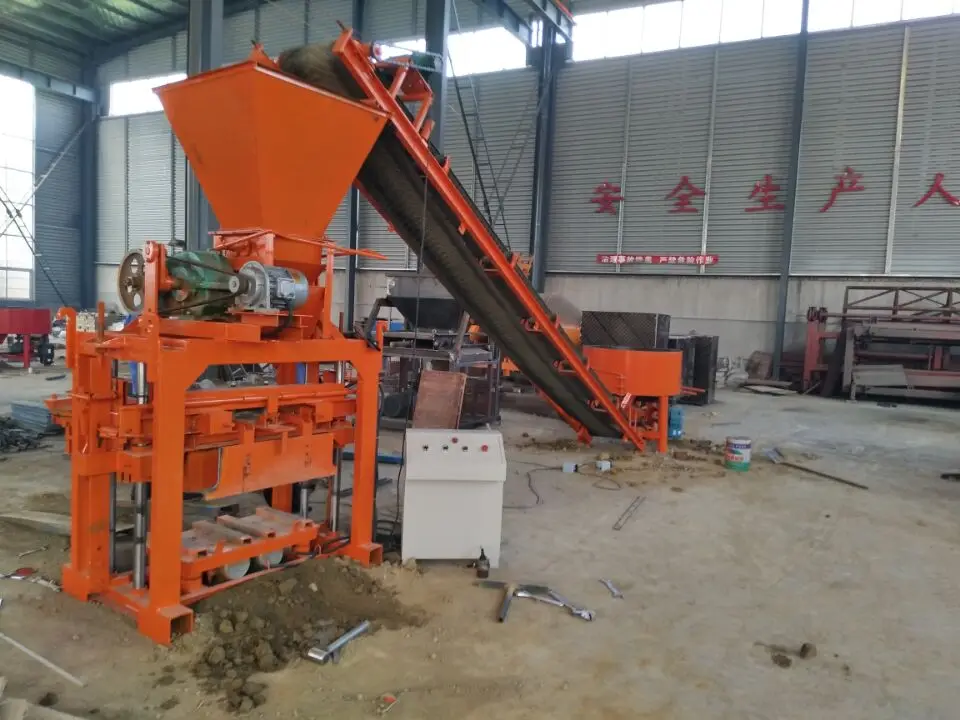
Cutting construction duration by 30–50% through on-site or near-site block production
Concrete block makers with high output capabilities are changing how construction schedules work because they allow building materials to be made right at the job site or nearby. No more waiting weeks for shipments from far away precast factories, which cuts down on those frustrating transportation issues that always seem to cause delays. The latest automated equipment can churn out around 1500 blocks every hour, which is roughly 20 times quicker than when workers cast them manually. What does this mean practically? A building's structural phase might take just seven months instead of the usual twelve month timeline. Having a steady supply of materials keeps the whole operation moving without interruptions. Plus, these machines handle everything from mixing the concrete to forming it into blocks and even starting the curing process all within one smooth sequence. This setup gets rid of the downtime normally needed for curing and makes the entire process less vulnerable to rain or other bad weather conditions that hold things up.
Enabling just-in-time delivery and eliminating material stockpiling delays
Lean construction gets a real boost from these machines because they match what's actually needed on site each day. The JIT approach to making blocks means no need for big storage areas anymore. Inventory waste drops around 25 percent, and materials stay available about 99 percent of the time. Nobody likes stockpiles sitting around gathering dust. They've been causing about 15 percent of all scheduling problems in the past. These new systems eliminate that problem completely. Blocks just move straight from the machine right to where workers need them, so nobody has to worry about bad weather damaging stored materials or paying extra for handling costs. Plus, sites aren't cluttered up with excess stuff. Take foundation work as an example. The machines can start churning out blocks while the foundation is still curing, so walls get built exactly when the crew needs them. Since everything happens right there on site, those pesky supply chain issues don't matter much anymore.
Optimizing Labor and Operational Efficiency Across the Block Production Workflow
Reducing labor dependency by up to 60% compared to manual block casting
Automatic concrete block production machines cut down on labor needs by around 60% when compared to traditional manual techniques. According to industry reports, these automated systems need only about three people working throughout the day to churn out approximately 10,000 blocks daily. That's quite different from what it takes manually where roughly 15 workers would be required just to make 500 blocks in the same timeframe. The robots take care of moving materials around, stacking them properly, and placing everything onto pallets, so there's very little need for human hands-on work. These machines maintain pretty good quality too, with defects happening at a steady rate of about 1.2%, thanks largely to those fancy sensors and feedback systems built into the process. All this translates to real money saved on operations and fewer headaches when trying to staff shifts consistently, especially during busy periods when finding enough workers can become challenging.
Integrated batching, molding, vibration compaction, and initial curing in a single automated cycle
Advanced machines consolidate the entire production sequence using Programmable Logic Controllers (PLCs) that synchronize:
- Automated batching with real-time moisture and aggregate proportioning sensors
- High-frequency vibration compaction (8,000–12,000 VPM) for optimal density
- Steam-curing chambers with programmable temperature and humidity profiles
- Automated demolding, stacking, and palletizing
This end-to-end integration eliminates transitional delays between stages, achieving 85% overall equipment effectiveness (OEE). Operators monitor and adjust all parameters—from raw material input to initial curing—through a unified interface, reducing training time and ensuring repeatable quality without process fragmentation.
Ensuring Consistent Quality and Structural Reliability with Precision Automation
When it comes to making blocks, precision automation ensures each one has consistent dimensions and holds together properly. With programmable vibration and pressure settings, we can keep everything within about plus or minus 1 mm tolerance. This basically gets rid of those annoying voids, honeycomb patterns, and other weak areas that make blocks fail under weight. Manual casting just doesn't compare because people can't consistently get the same results when compacting and curing materials. Automated systems watch over things constantly checking density levels, how much moisture is present, and temperature changes throughout production. If something needs adjustment, the machine makes it happen automatically so the blocks develop maximum strength. Defects? They go down somewhere between 30% to maybe even half that number. Every batch produced passes the ASTM C90 requirements for structural masonry including at least 1,900 psi compression strength. All this consistency means fewer problems during quality checks, less wasted time fixing mistakes, and ultimately safer buildings standing tall.
Selecting the Right Concrete Block Making Machine: Fully Automatic vs. Semi-Automatic Trade-offs
Matching automation level to project scale, budget, and long-term ROI goals
When deciding between fully automatic versus semi-automatic concrete block makers, most businesses consider three main things: what kind of project they're tackling, how much money they can actually spend upfront, and where they want to be in five years time. The semi automatic versions usually cost around 30 to 50 percent less than their fully automated counterparts, which makes them pretty attractive for smaller operations or contractors who don't have deep pockets. These machines still let workers keep an eye on certain parts of the process like feeding materials into the machine and removing finished blocks, giving some control back to humans. But there's a trade off here too - each block takes more hands on time compared to what an all automated system could handle. Many local builders find this works best when starting out before scaling up later.
Automatic machines can crank out between 800 to 1200 blocks per hour with almost no need for human operators, cutting labor costs by as much as 60%. For big construction projects or factories running non-stop production lines, these machines make financial sense when speed matters and consistent results are needed day after day. Sure, they come with a bigger price tag upfront, but look at it this way: better overall equipment effectiveness means fewer breakdowns, less reliance on workers in the long run, and far fewer defective products. The savings stack up month after month, making the investment worthwhile for most manufacturers who plan ahead.
Consider scalability: semi-automatic units allow incremental expansion, whereas fully automatic systems maximize throughput for fixed-deadline, high-volume projects. Maintenance complexity is higher for fully automated systems—but built-in diagnostics and predictive servicing minimize unplanned downtime.
Matching equipment choices to production volumes and expected growth makes sense for most businesses. When demand fluctuates, semi automatic systems work better while full automation shines when things get really busy and consistent output matters most. Companies thinking about gradual expansion might want to look at modular options instead. These setups start off semi automatic but can be upgraded piece by piece as customer needs grow over time. The math gets complicated though. Anyone serious about this should calculate those break even points carefully, factoring in what workers cost locally, electricity prices, and how much machines will actually run each day. This helps figure out if spending extra on automation upfront really pays off in the long run.
FAQ
What is the advantage of using high-output concrete block making machines on construction sites?
High-output concrete block making machines drastically reduce construction timelines by producing materials on-site or nearby, eliminating delays caused by transporting blocks from distant factories.
How do such machines support just-in-time delivery?
These machines produce only what is needed daily, minimizing inventory waste and ensuring materials are readily available, thereby eliminating the need for large storage spaces and alleviating scheduling problems.
What is the difference between fully automatic and semi-automatic concrete block machines?
Fully automatic machines require minimal human intervention and are suited for high-volume, consistent production, while semi-automatic machines are more cost-efficient initially but require more manual operation, offering flexibility for smaller projects or gradual scaling.
How do automated block making systems ensure consistent quality?
These systems use precision automation with programmable settings to maintain tight tolerances, continuously monitoring and adjusting variables to ensure the strength and quality of each block, reducing defects substantially.
Table of Contents
- Accelerating Project Timelines with High-Output Concrete Block Making Machines
- Optimizing Labor and Operational Efficiency Across the Block Production Workflow
- Ensuring Consistent Quality and Structural Reliability with Precision Automation
- Selecting the Right Concrete Block Making Machine: Fully Automatic vs. Semi-Automatic Trade-offs
-
FAQ
- What is the advantage of using high-output concrete block making machines on construction sites?
- How do such machines support just-in-time delivery?
- What is the difference between fully automatic and semi-automatic concrete block machines?
- How do automated block making systems ensure consistent quality?